
JOGJA PLANNING GALLERY






- SERVICE
- CLIENT
- LOCATION
- SIZE
- YEAR
- STATUS
- TEAM
- Architecture, Landscape, Urban Design, Competition (Longlist)
- Pemerintah Kota Jogja
- Jogjakarta - Indonesia
- 2,1 ha
- 2022
- Competition
-
Ezra Ganesha
Fajri Ferdiansyah
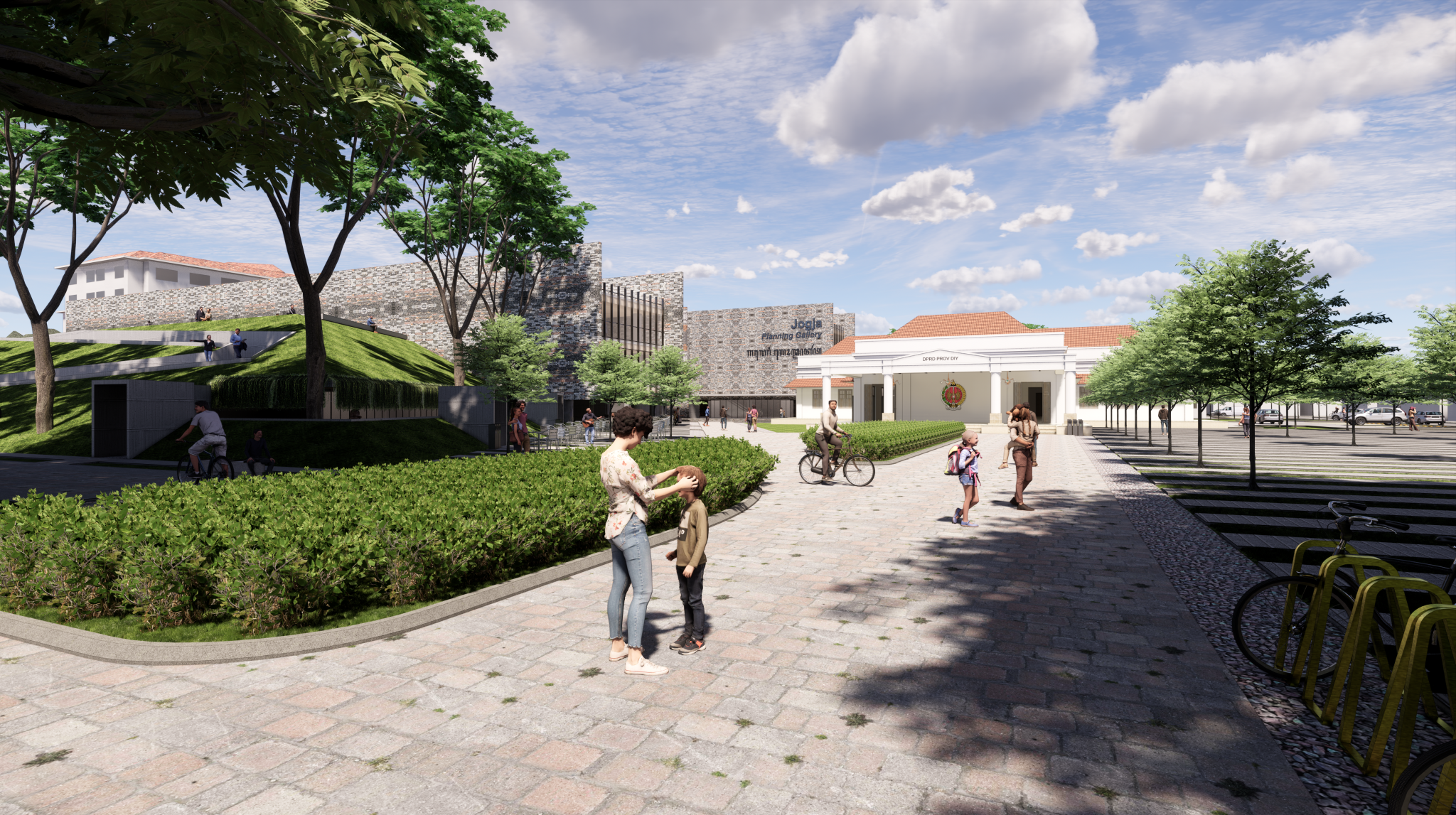
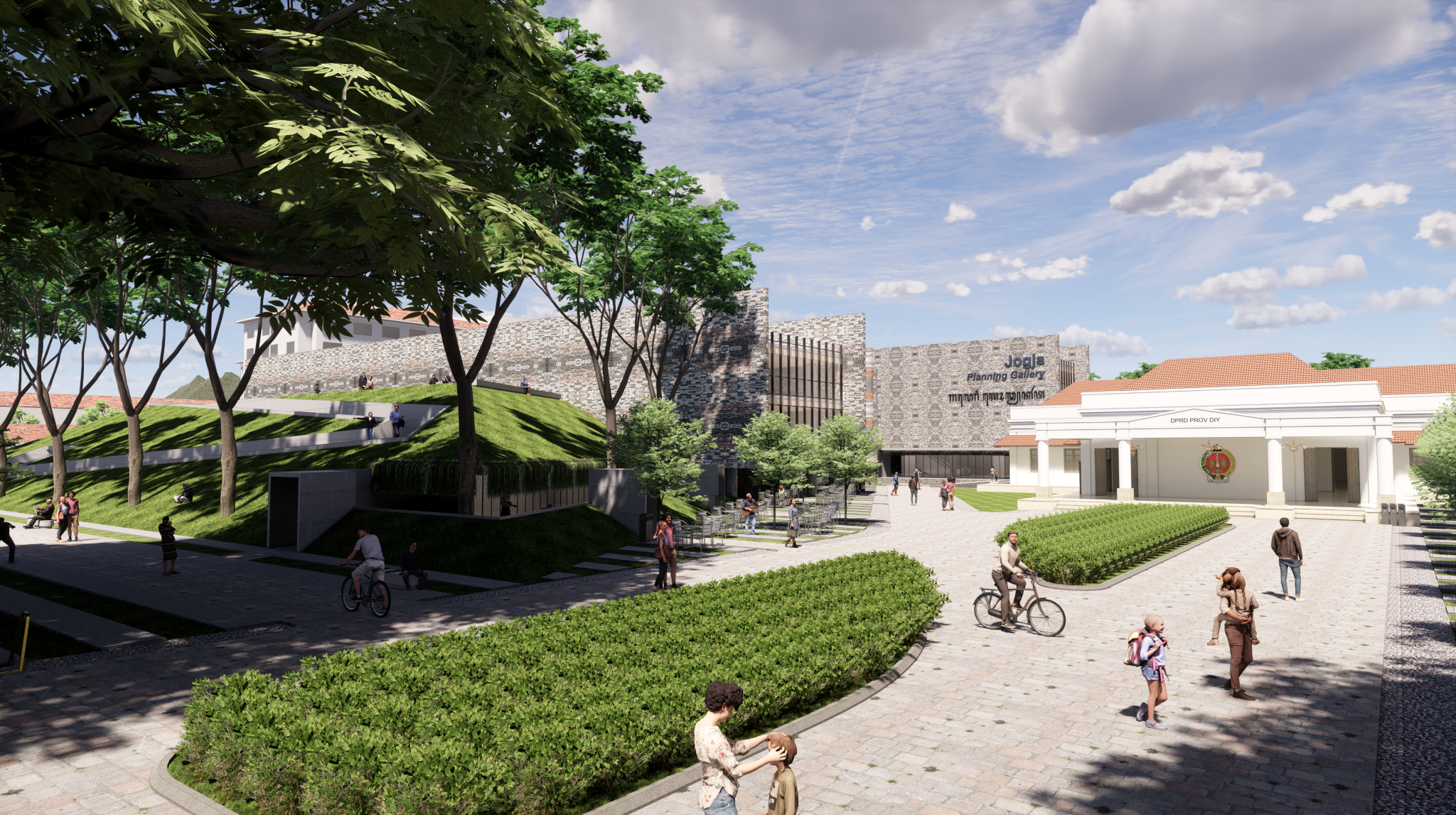
The Jogja Planning Gallery, situated along the historic Jalan Malioboro in Yogyakarta, Central Java, Indonesia, represents a thoughtful fusion of historical reverence and contemporary urban design. Located on one of Yogyakarta’s most iconic streets, the gallery aims to bridge the rich cultural heritage of the past with a forward-looking vision for the city’s development. This project seeks to create a space that not only serves as a planning and exhibition center but also embodies the spirit of Yogyakarta’s historical landscape and its commitment to sustainable and empathetic urban growth.
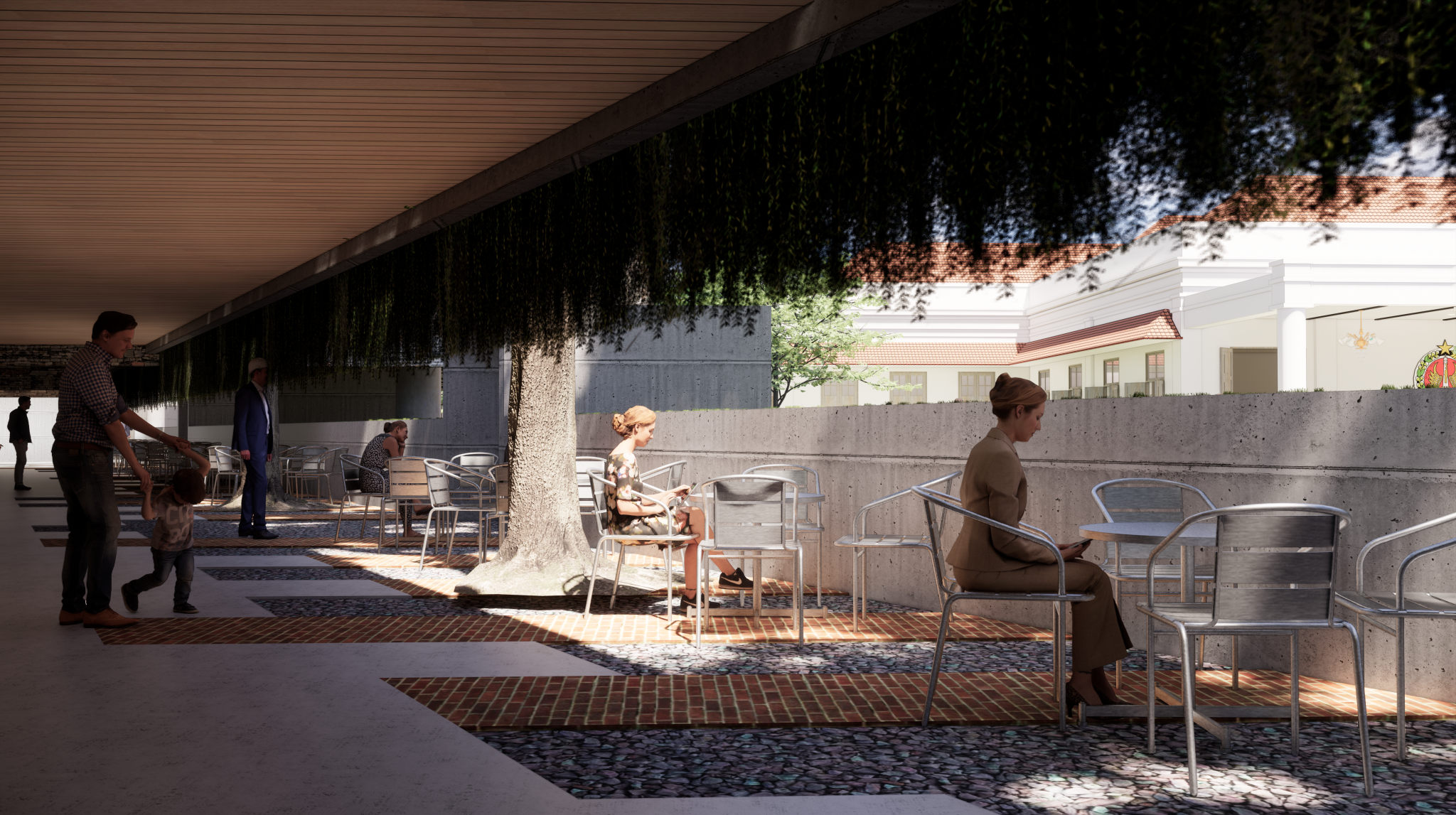
The concept for the Jogja Planning Gallery is inspired by the nostalgic landscape of Yogyakarta’s past, specifically the verdant surroundings of 500 years ago when Jalan Malioboro served as a route for the Mataram nobility en route to the Imogiri burial grounds. This historical backdrop is reimagined in the gallery’s design to reflect a commitment to environmental stewardship and the city’s deep-rooted cultural heritage. The design emphasizes a lush green environment that echoes Yogyakarta’s historical connection to its natural landscape.
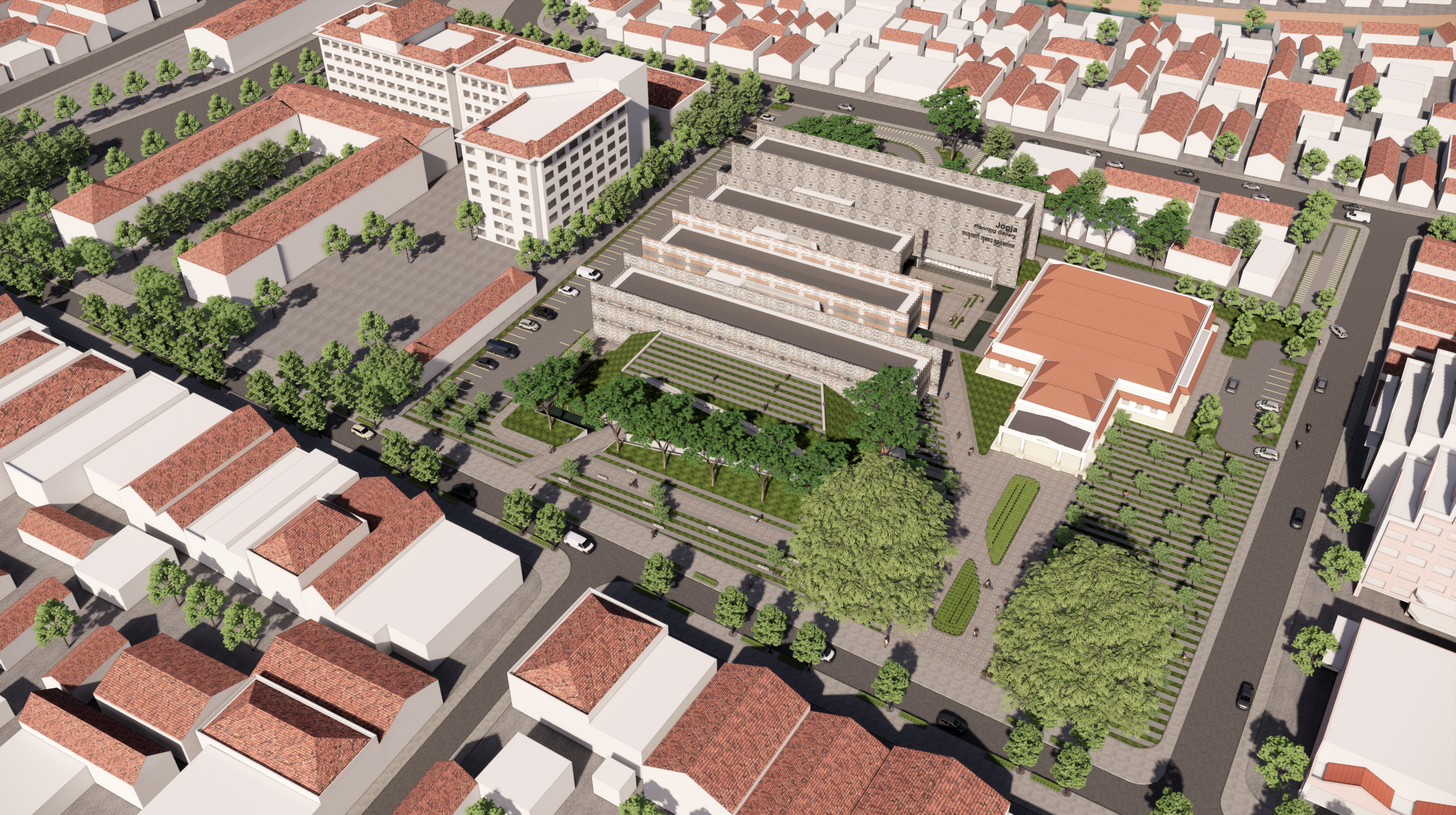
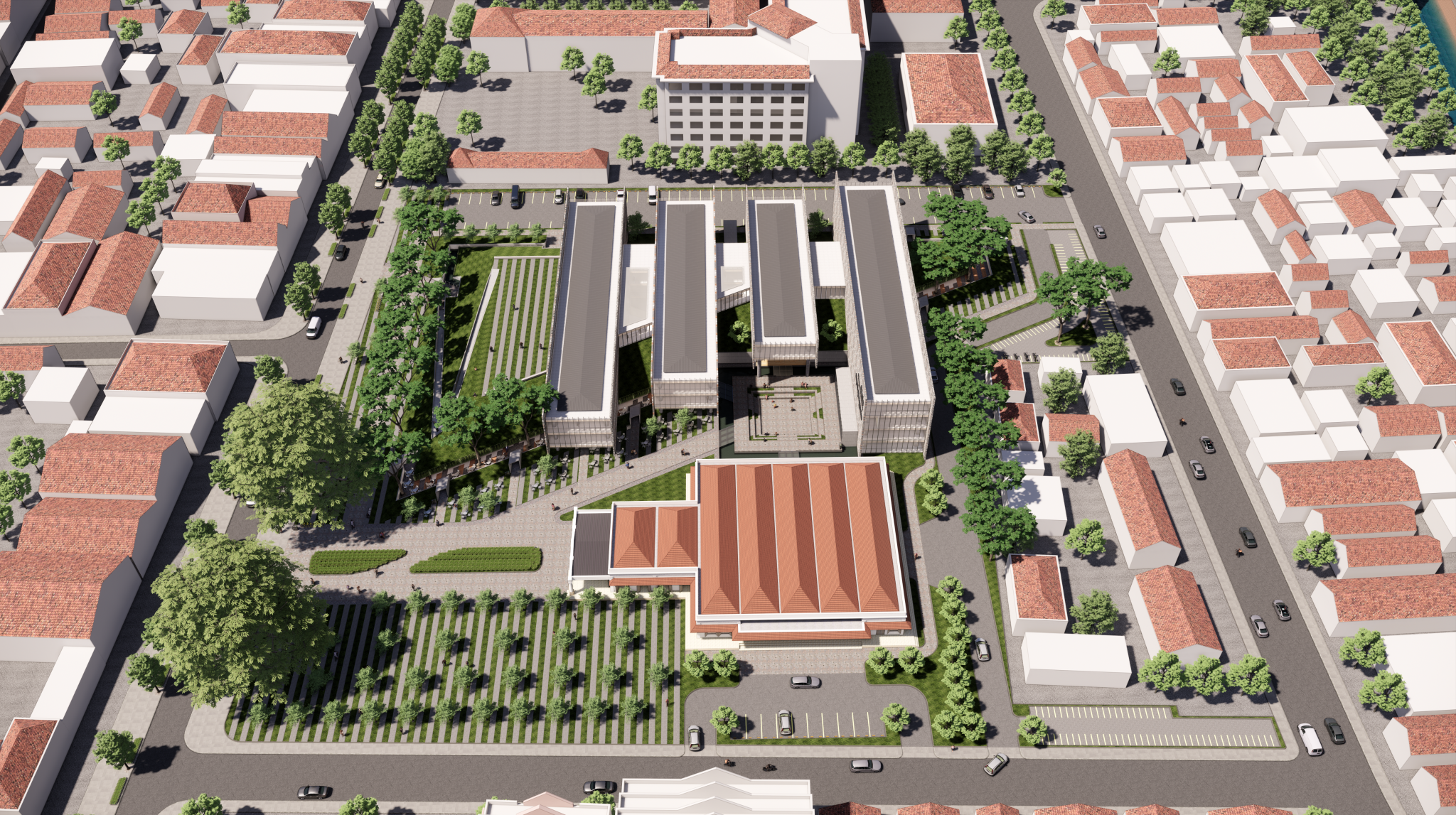
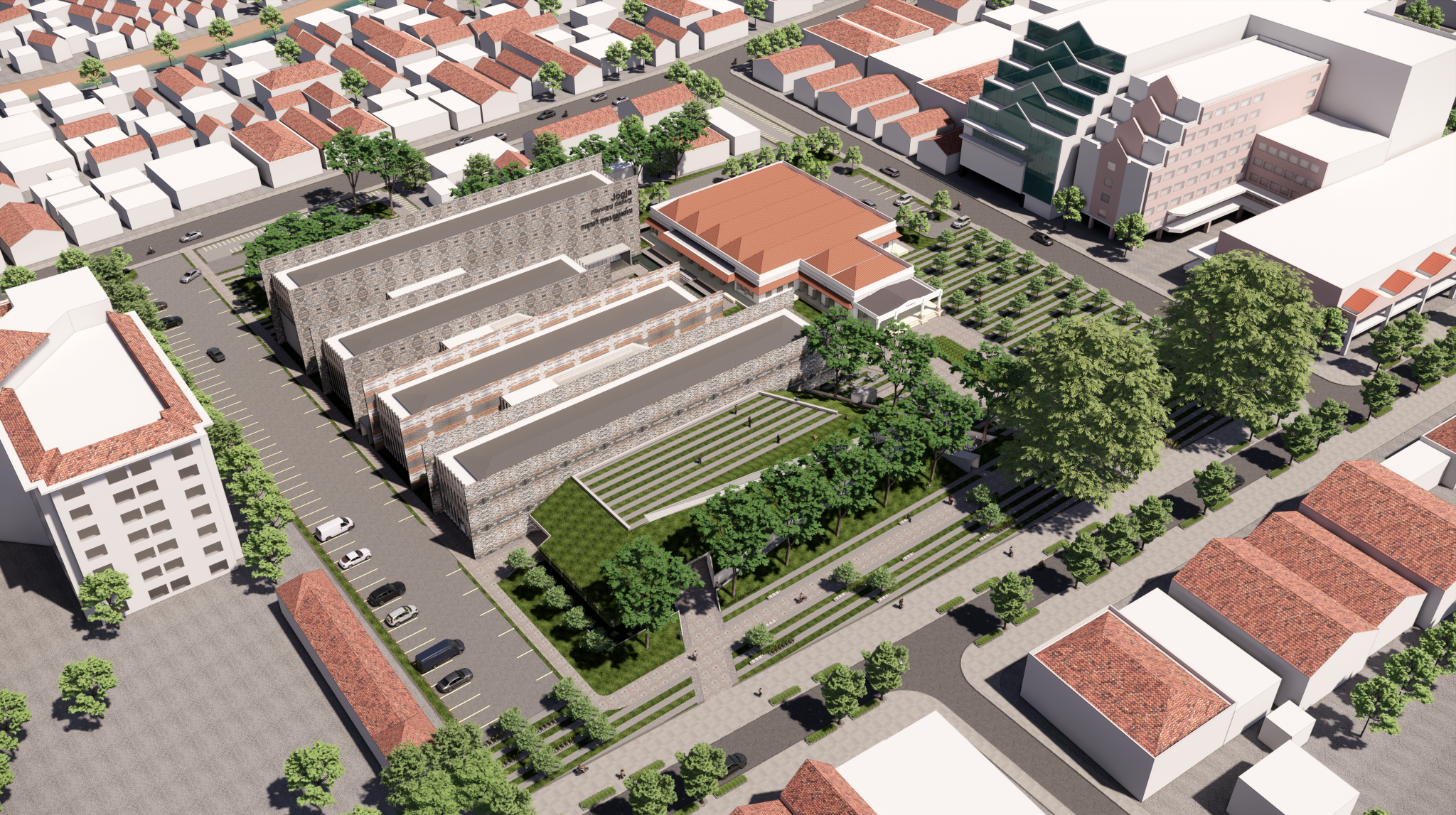
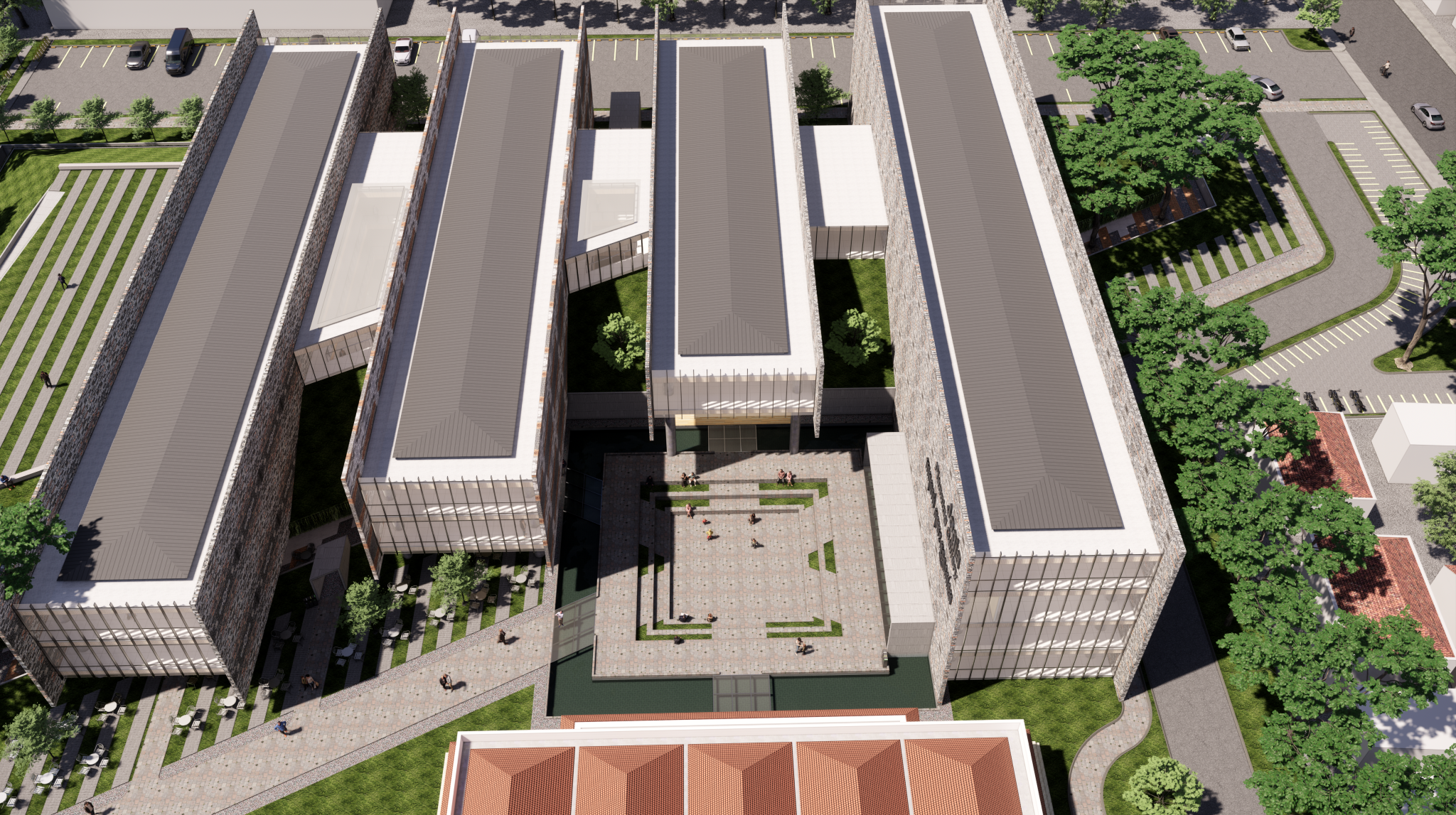
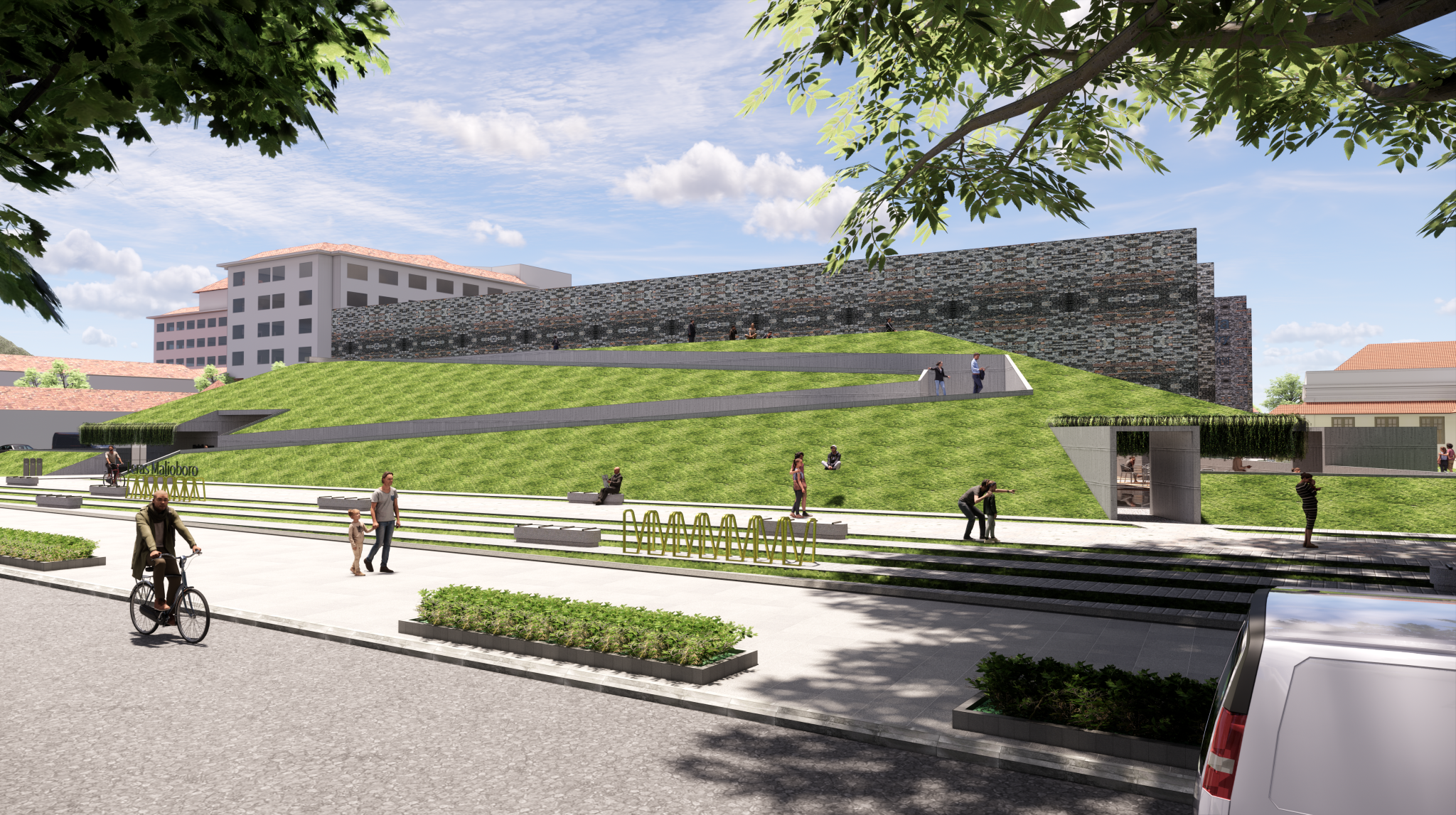
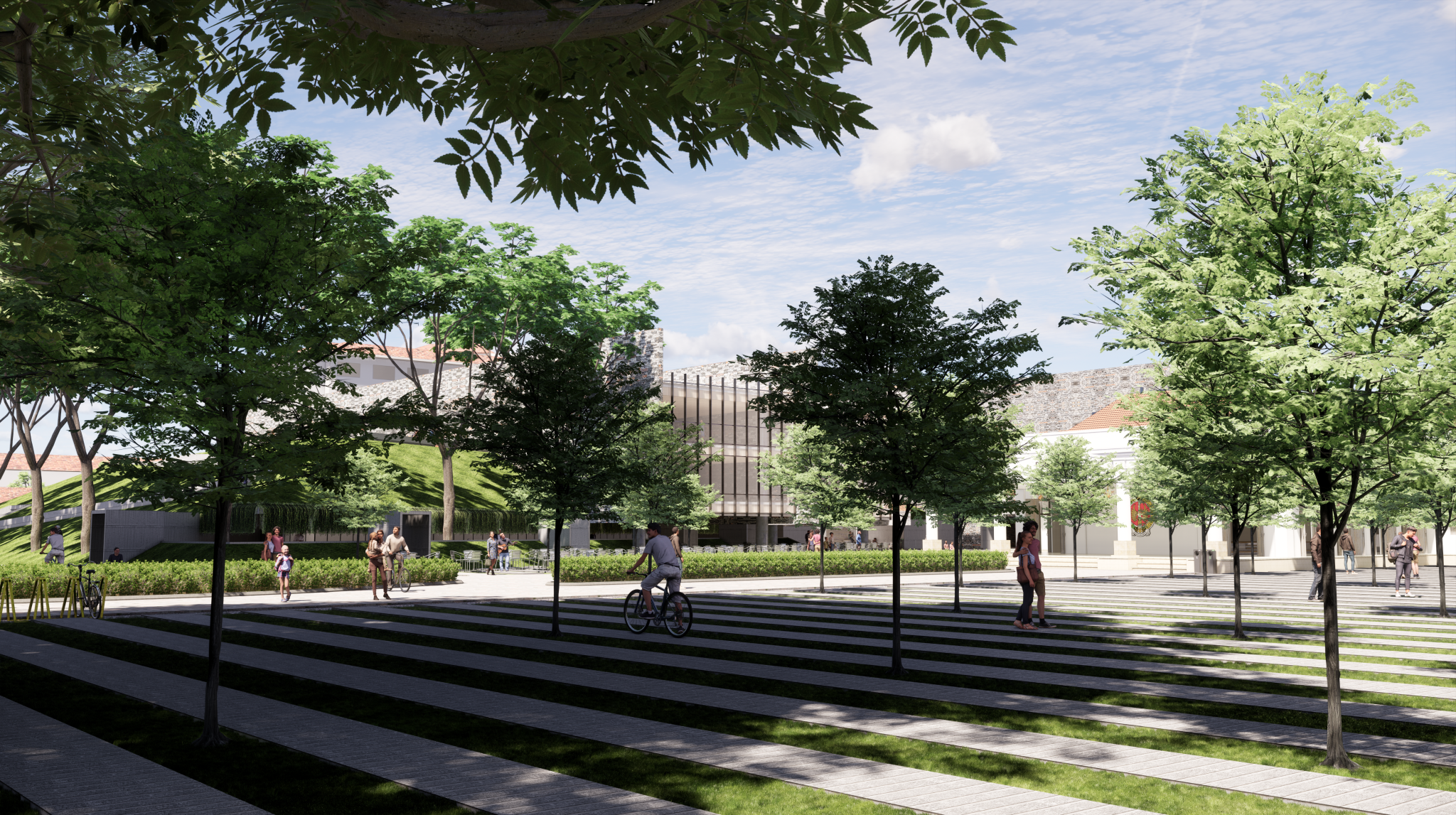
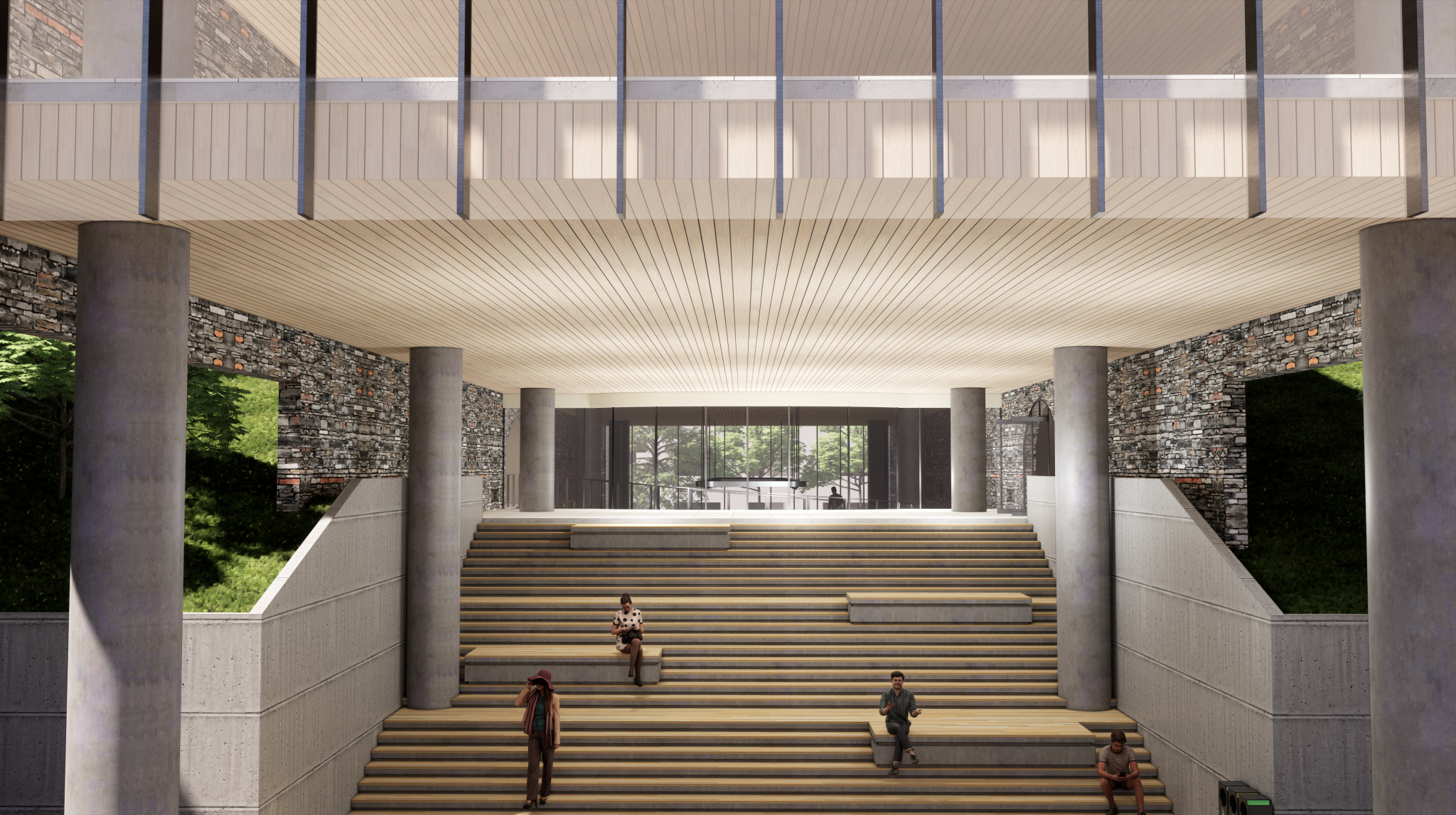
The gallery’s layout integrates extensive green spaces, transforming the building’s podium into a “Bukit Hijau” or Green Hill. This elevated green space, accessible via a ramp, acts as a public terrace, providing visitors with panoramic views of Jalan Malioboro. The central area, known as Latar Ombo, functions as a gathering space that aligns with Javanese philosophical principles, representing the convergence of micro and macrocosms. This design element reflects the traditional Javanese symbolism of the four or eight cardinal directions and the concept of Sedulur Papat Limo Pancer, emphasizing the intersection of spiritual and physical realms.
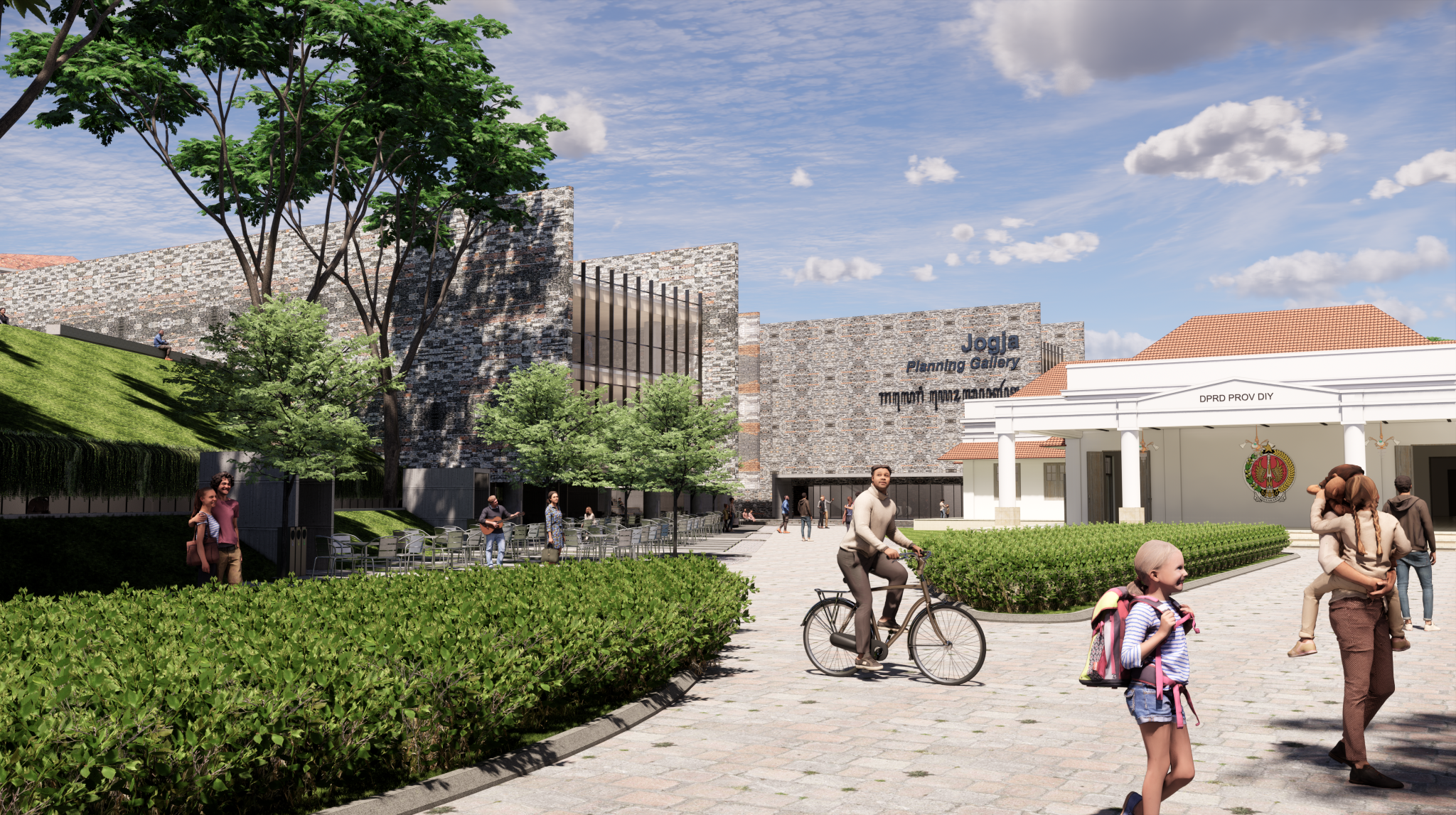
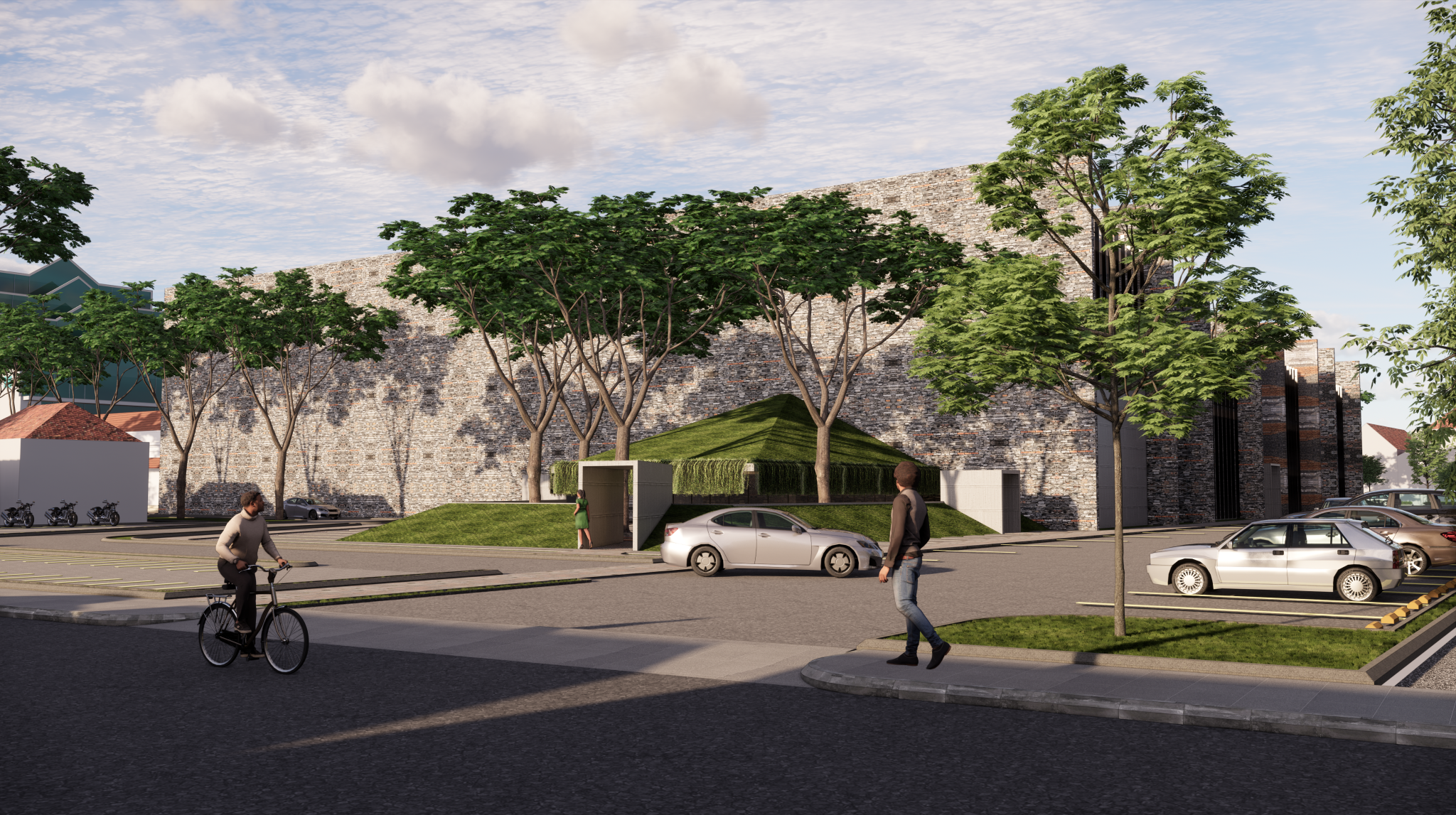
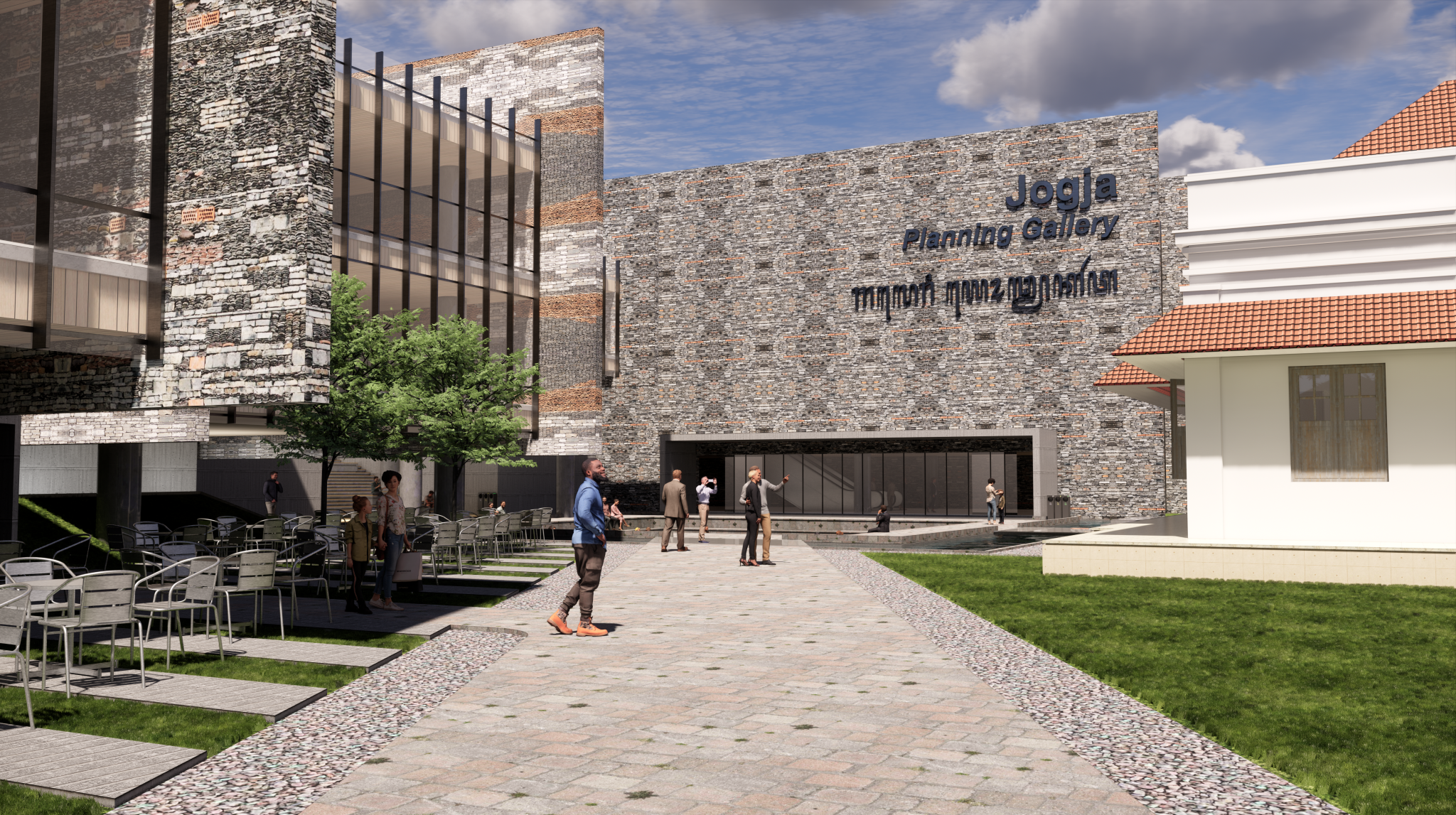
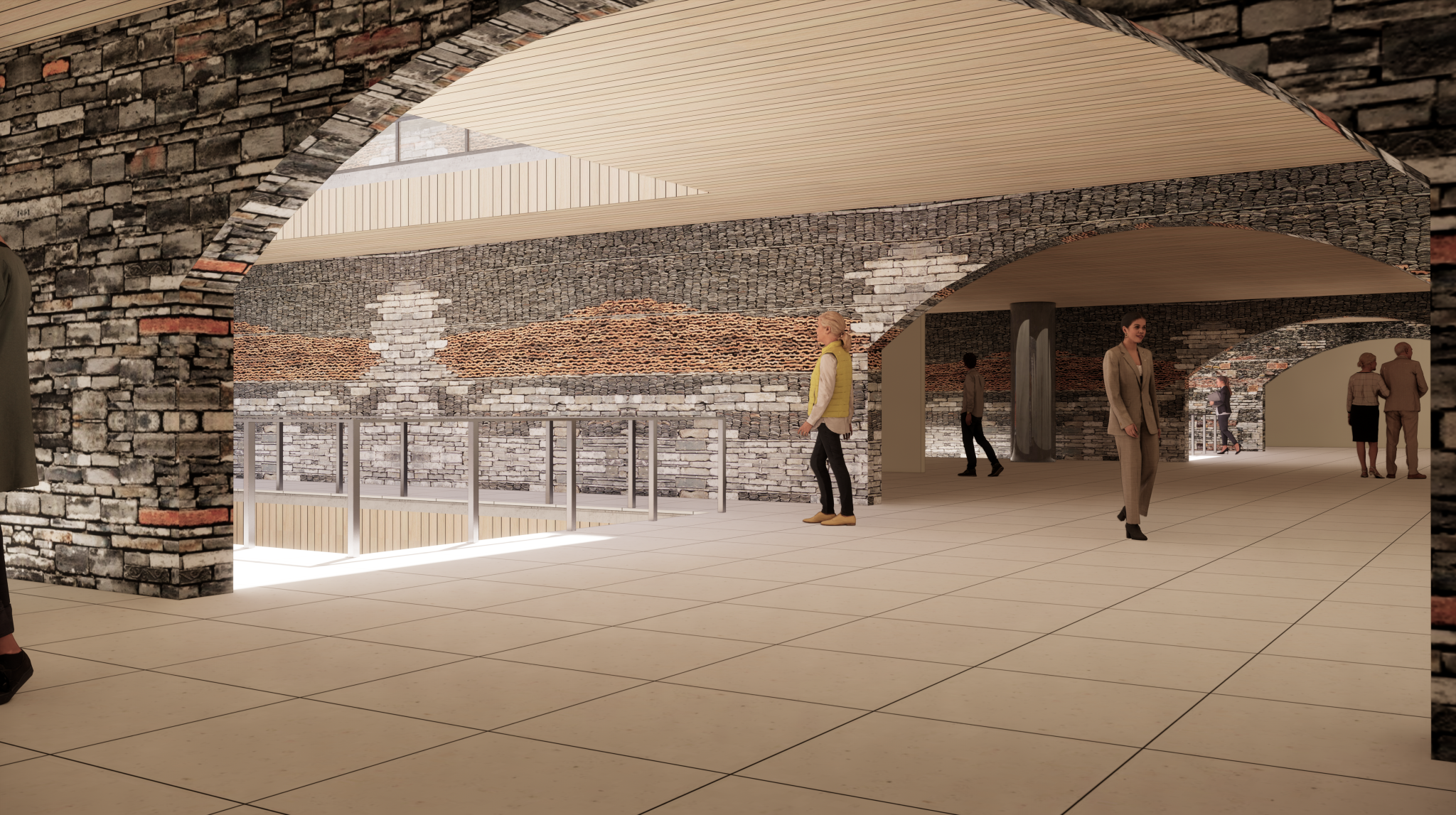
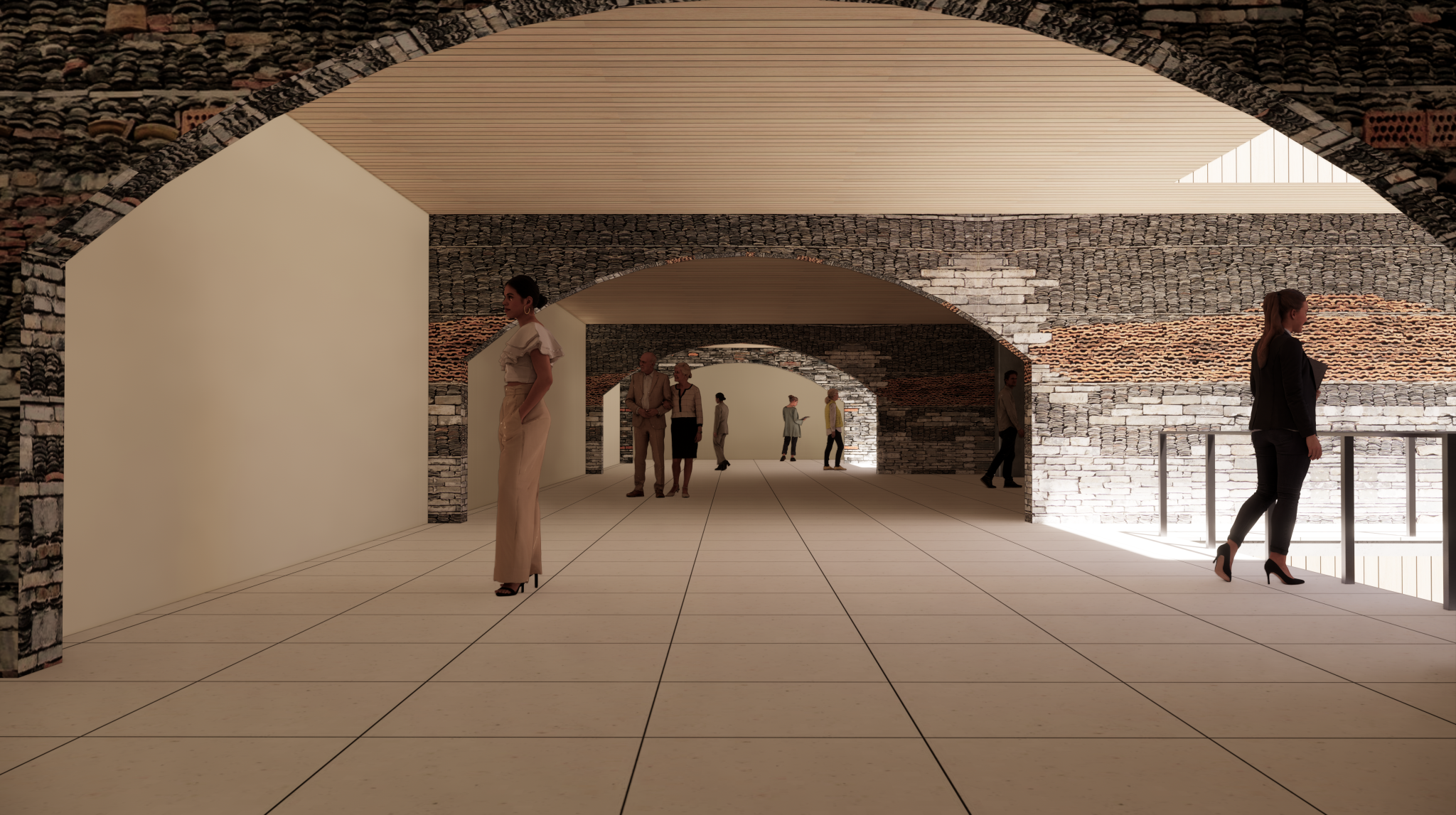
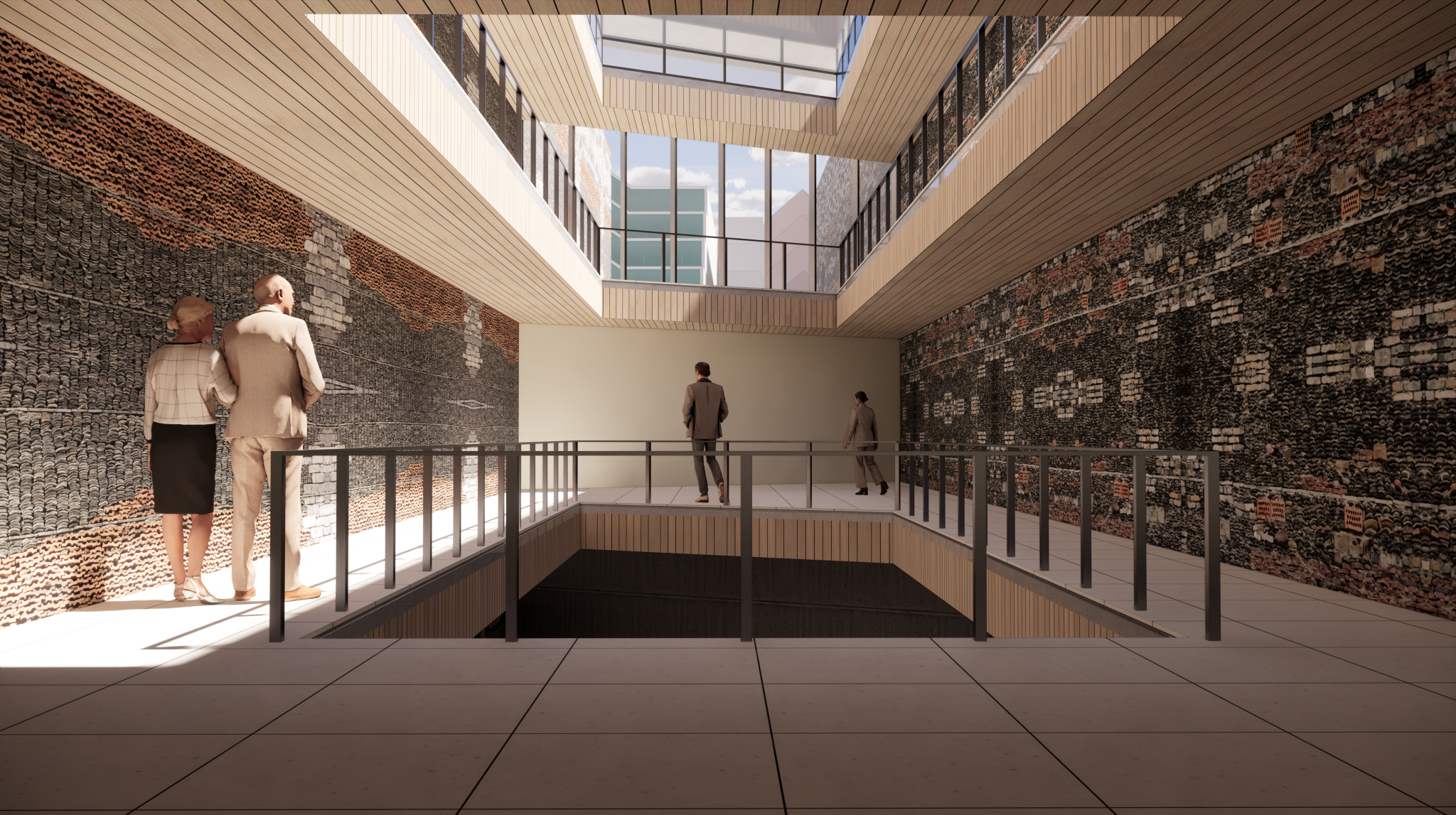
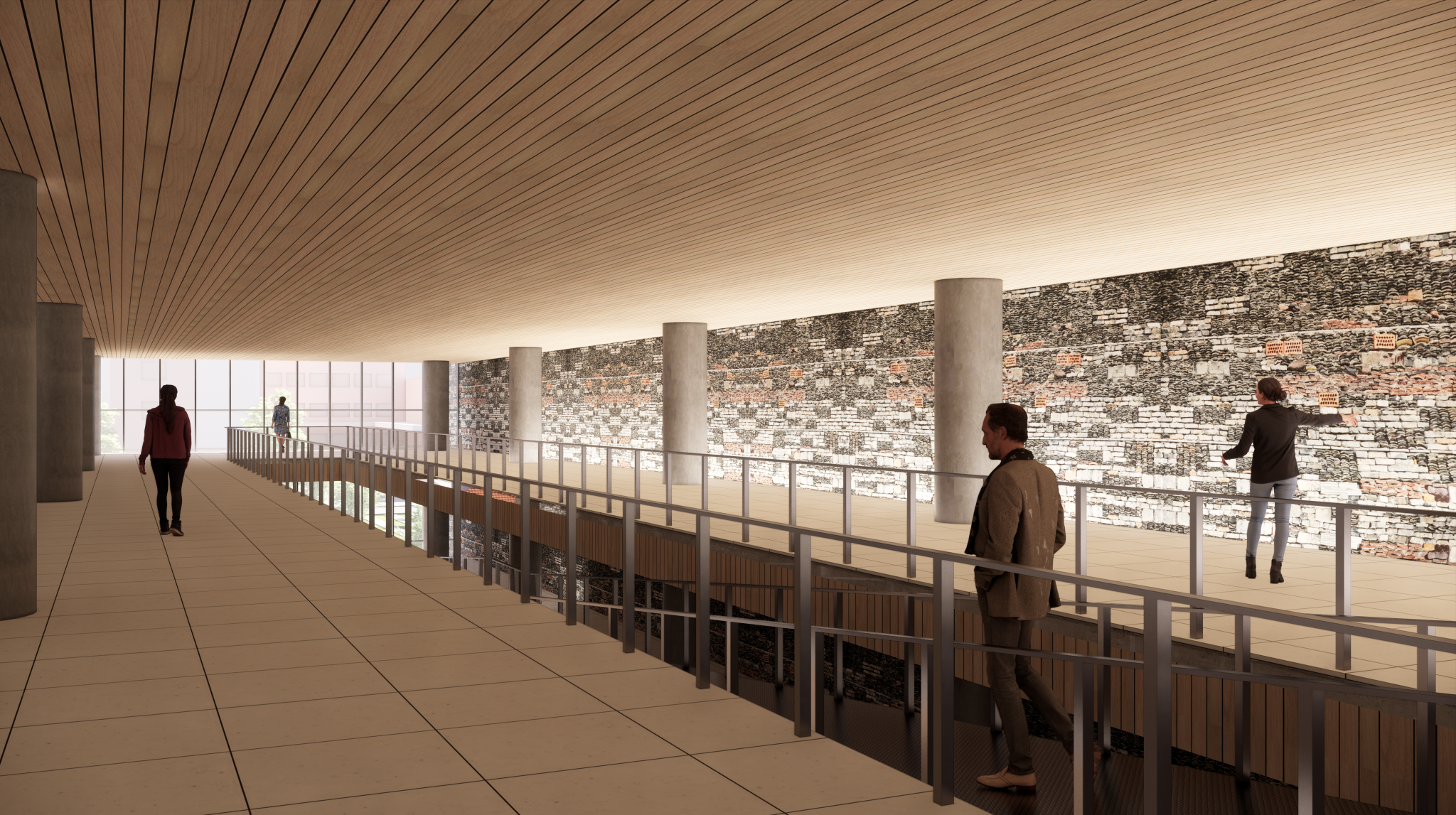
Incorporating the concept of Urunan Watu, the gallery invites community participation in creating the building’s facade. Locals are encouraged to contribute materials such as reclaimed bricks, local stone, clay tiles, and other weather-resistant crafts. This collaborative approach not only fosters a sense of ownership but also ensures that the building’s exterior is deeply connected to the local context. The façade, formed from a collage of these materials, provides a tactile and visually grounded representation of Yogyakarta’s cultural and historical fabric.
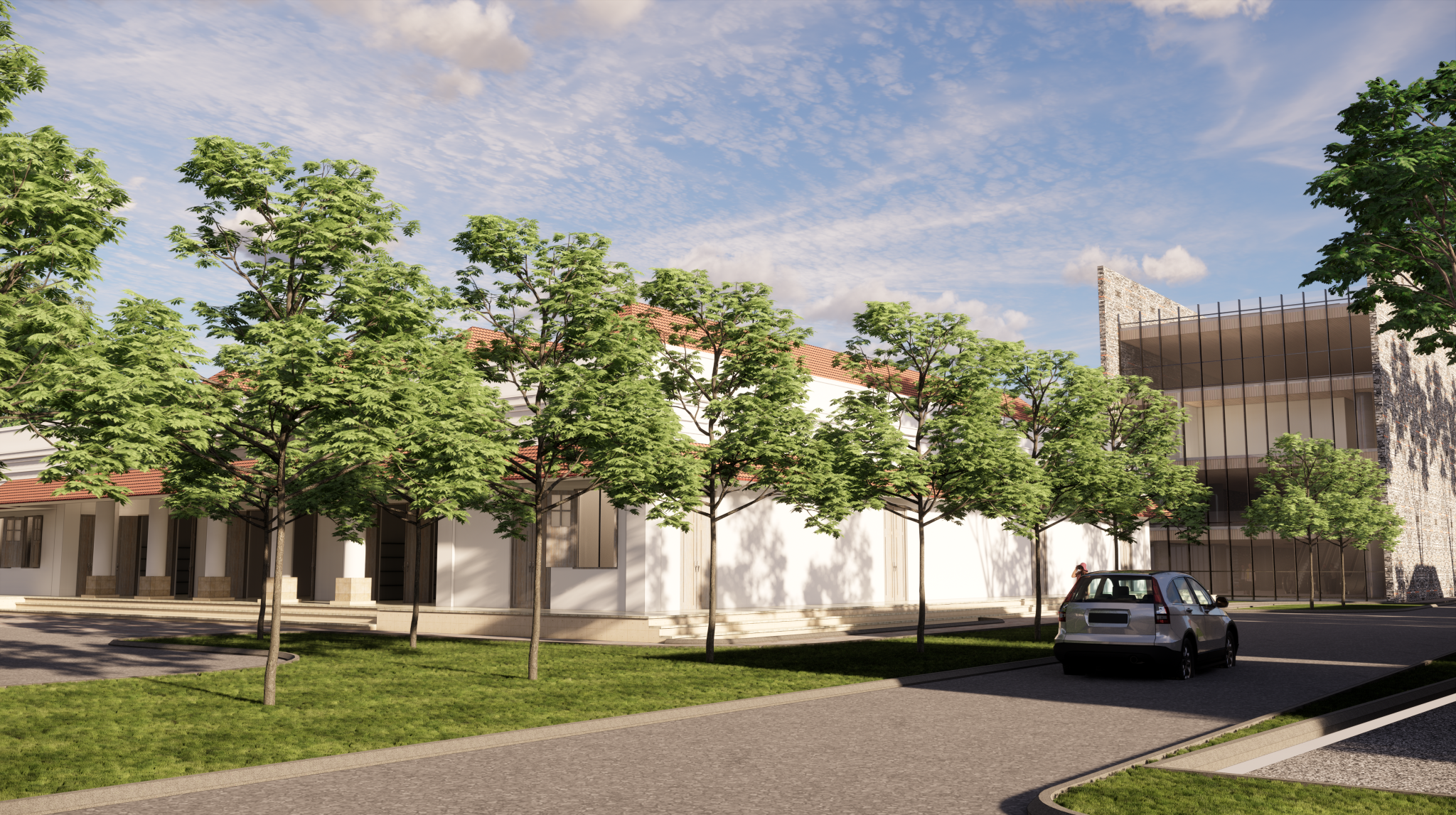
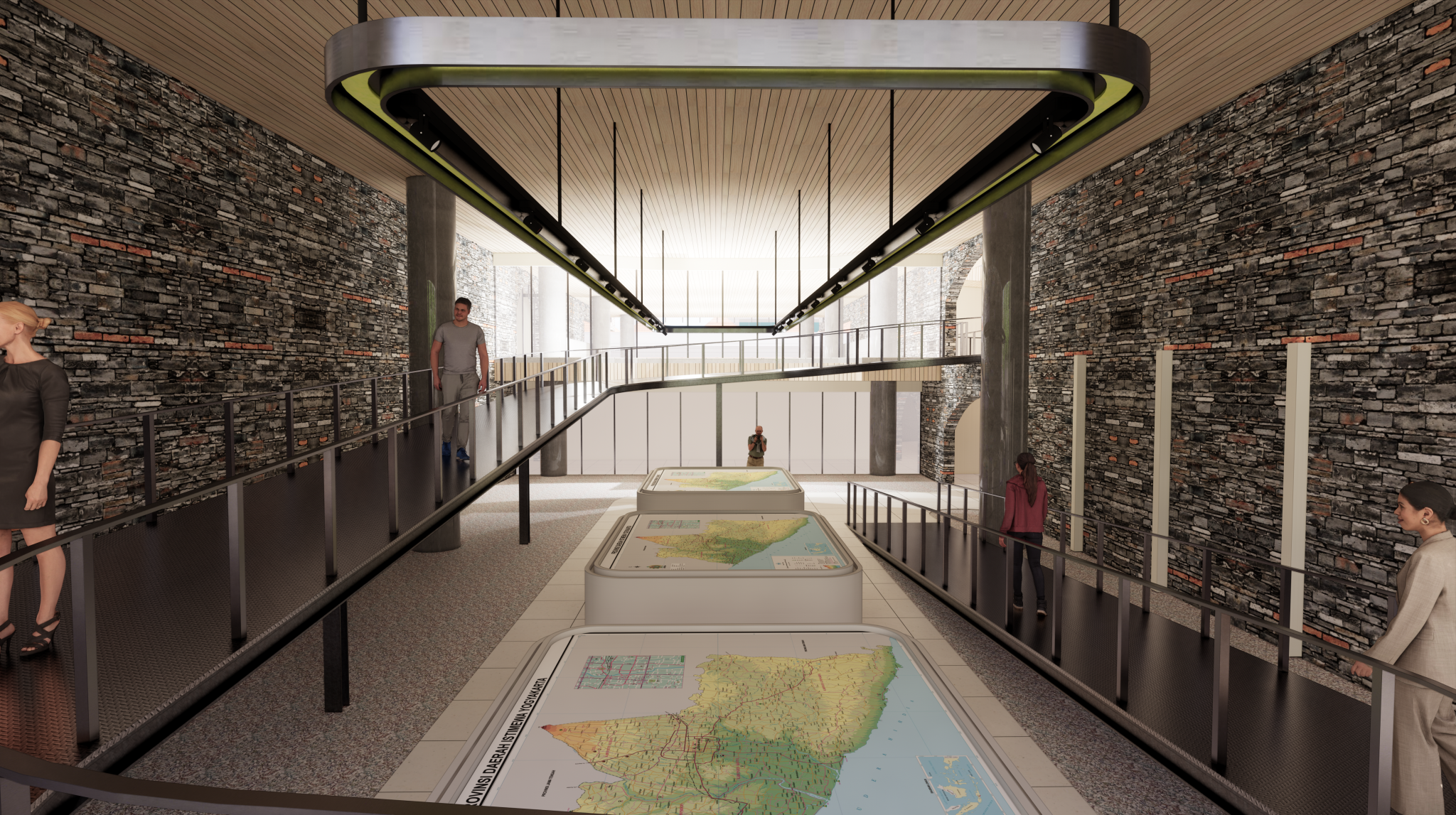
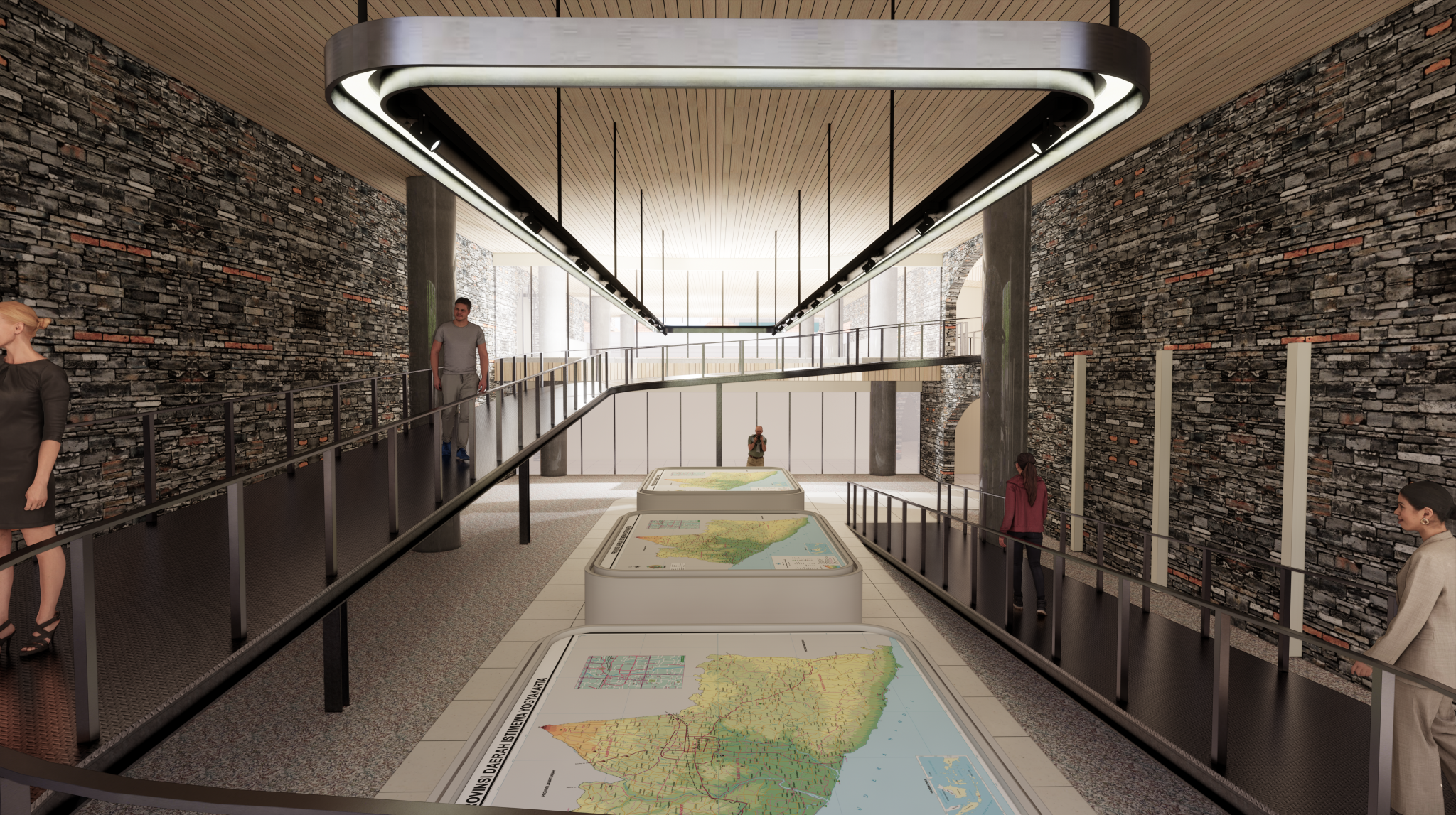
The new building’s composition mirrors the alignment of traditional Javanese philosophy, with its design elements arranged to emphasize the axis between the southern coast and Merapi, reinforcing the site’s historical role as a connecting corridor. Vertical walls, known as Watu Jajar, are strategically placed to accentuate this axis while preserving the vista towards Merapi. The interplay between these elements and the Green Hill serves as both a nostalgic homage and a symbol of the city’s commitment to honoring its natural and cultural landscape.
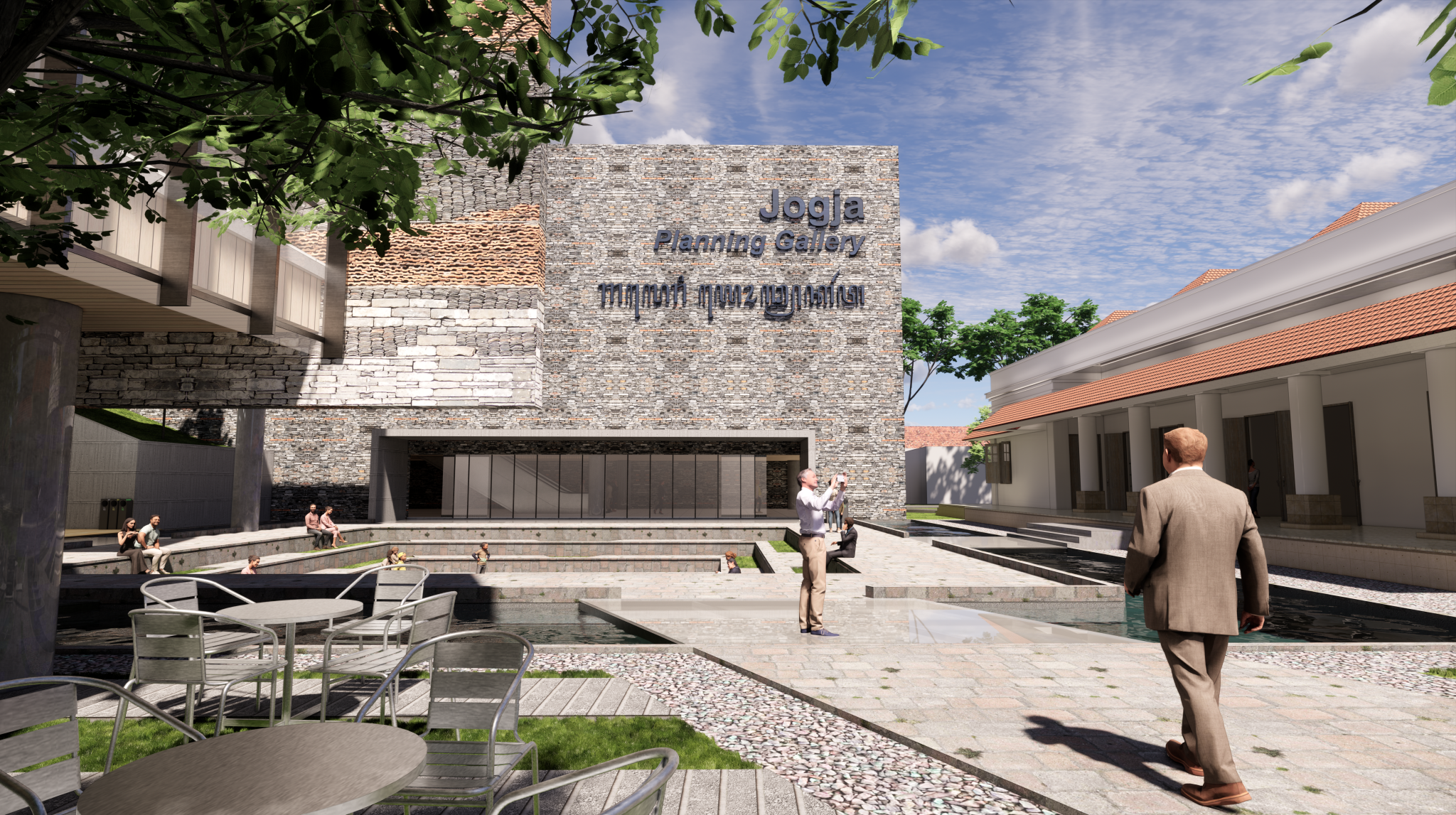
Finally, the gallery’s design features floating and torn elements within the Green Hill, creating dynamic public spaces that encourage visitors to explore the site and engage with the historical buildings in the vicinity. This design approach fosters an inclusive, interactive experience that bridges past and present, reflecting Yogyakarta’s dedication to sustainable development and cultural appreciation.