
RUMAH TAHFIDZ SUKABUMI


- SERVICE
- CLIENT
- LOCATION
- SIZE
- YEAR
- STATUS
- TEAM
- Architecture, Landscape
- NA
- Sukabumi, Jawa Barat - Indonesia
- 2 Ha
- 2021
- On Going
-
Ezra Ganesha
Fajri Ferdiansyah
Dedi K. Dwitomo
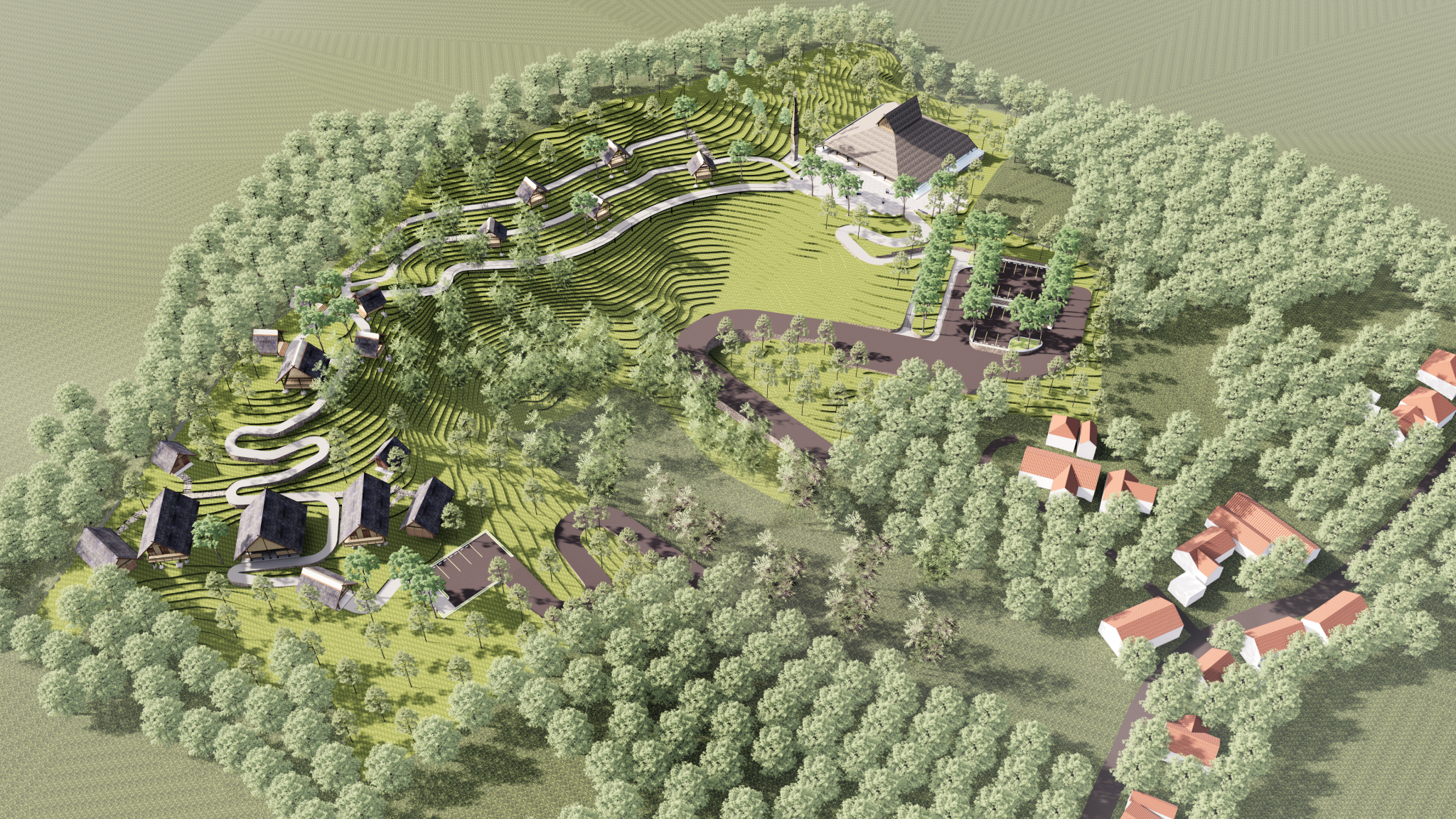
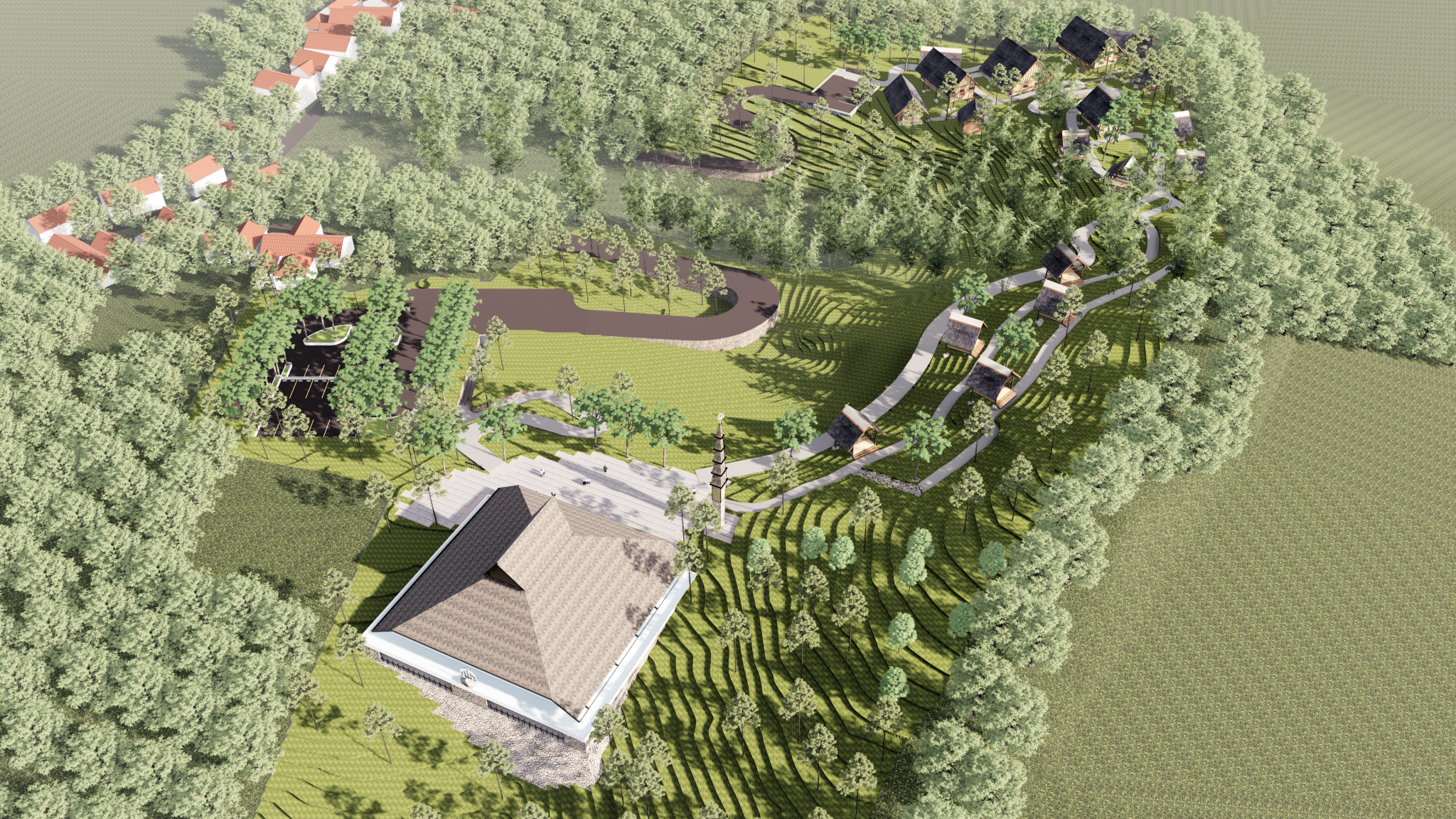
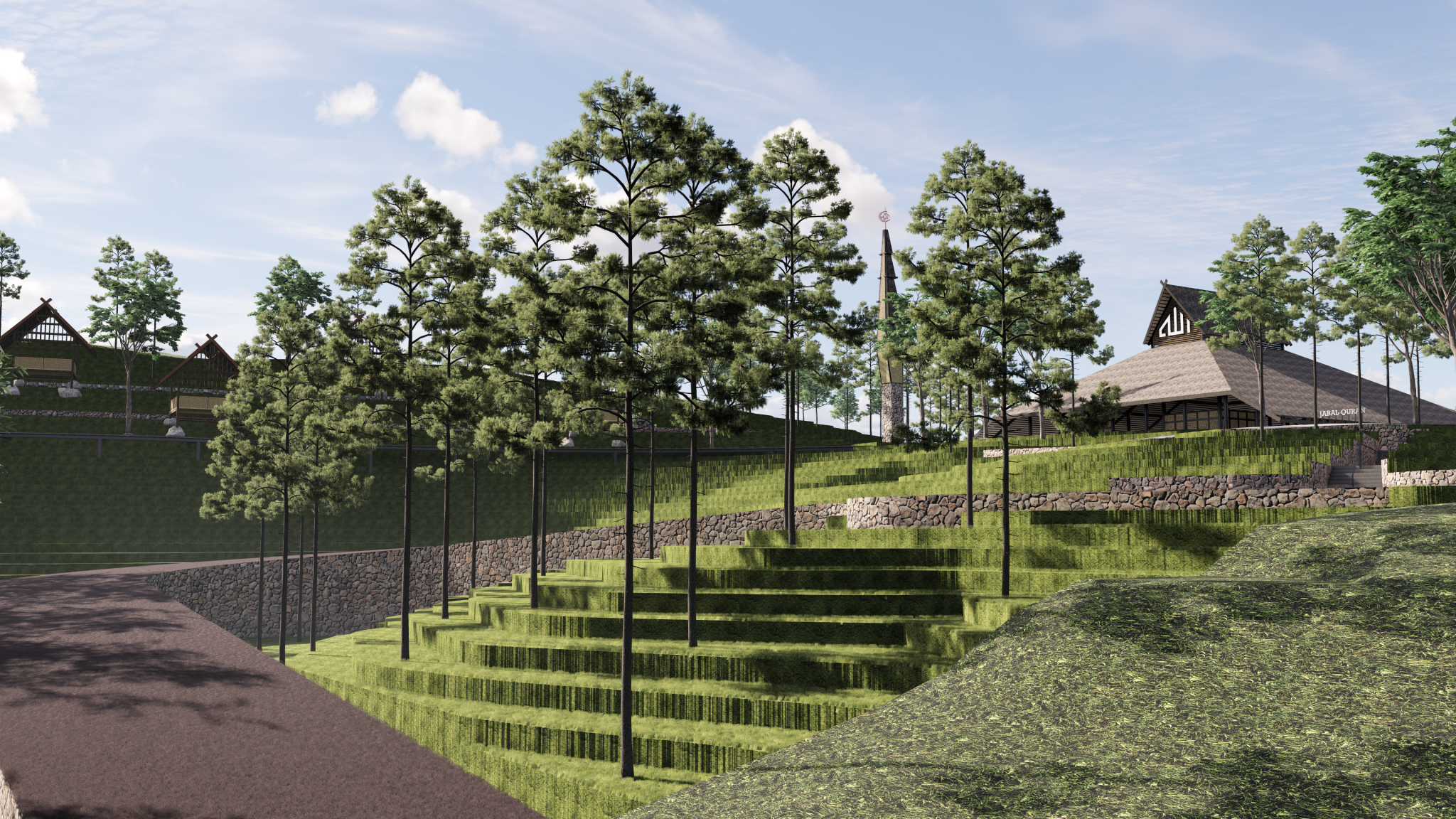
The Tahfidz Quran House, named Jabal Quran, is an architectural embodiment of spiritual reflection and serenity, located in the tranquil landscape of Sukabumi, West Java, Indonesia. The term “Jabal” translates to “hill,” symbolizing a place of elevation and guidance, akin to the hill where the Prophet Muhammad received divine revelations. This concept is deeply interwoven into the architectural narrative, creating a sacred space that serves both as a retreat for Quranic scholars and a beacon of spiritual growth.
Architectural Expression
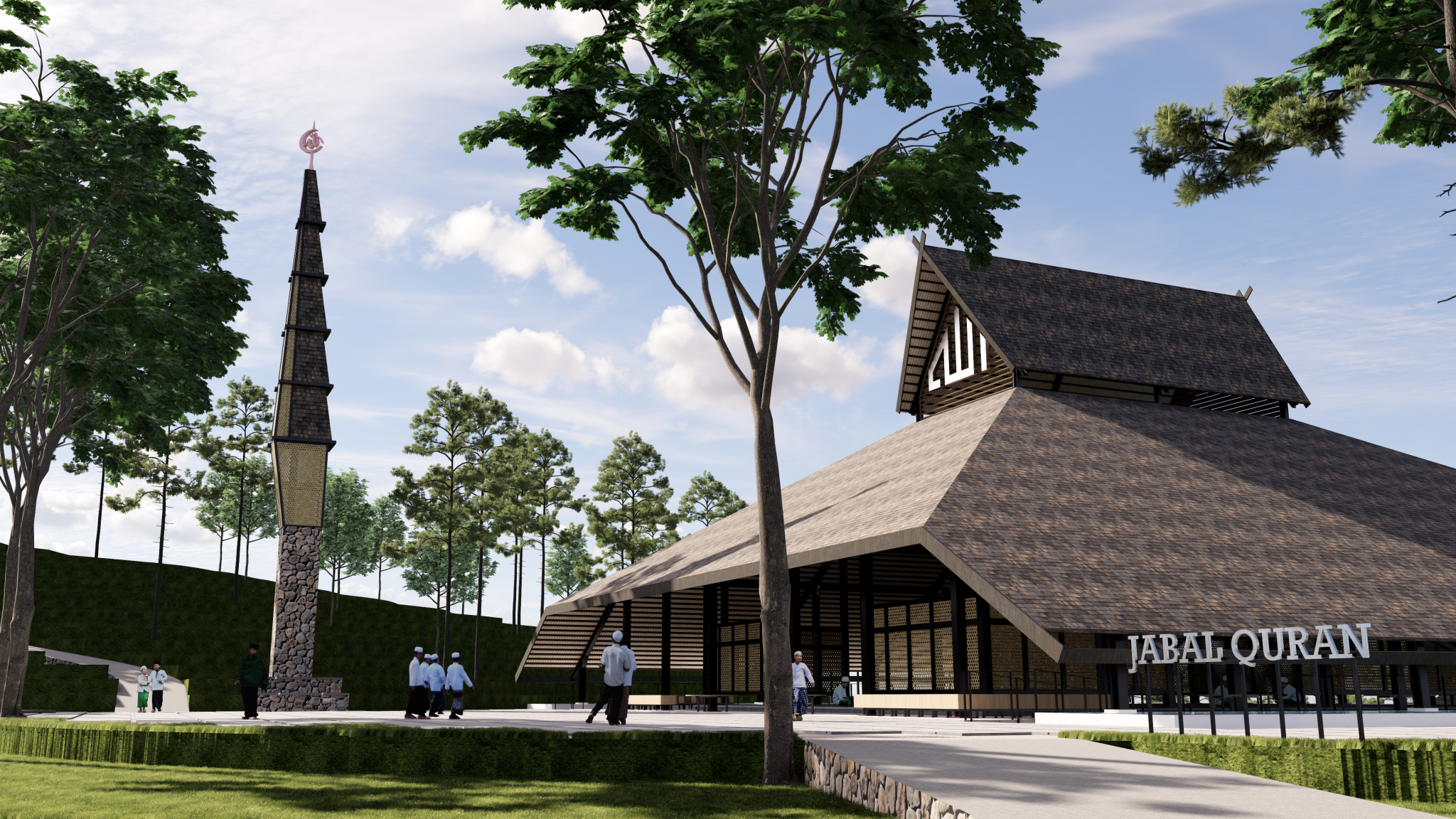
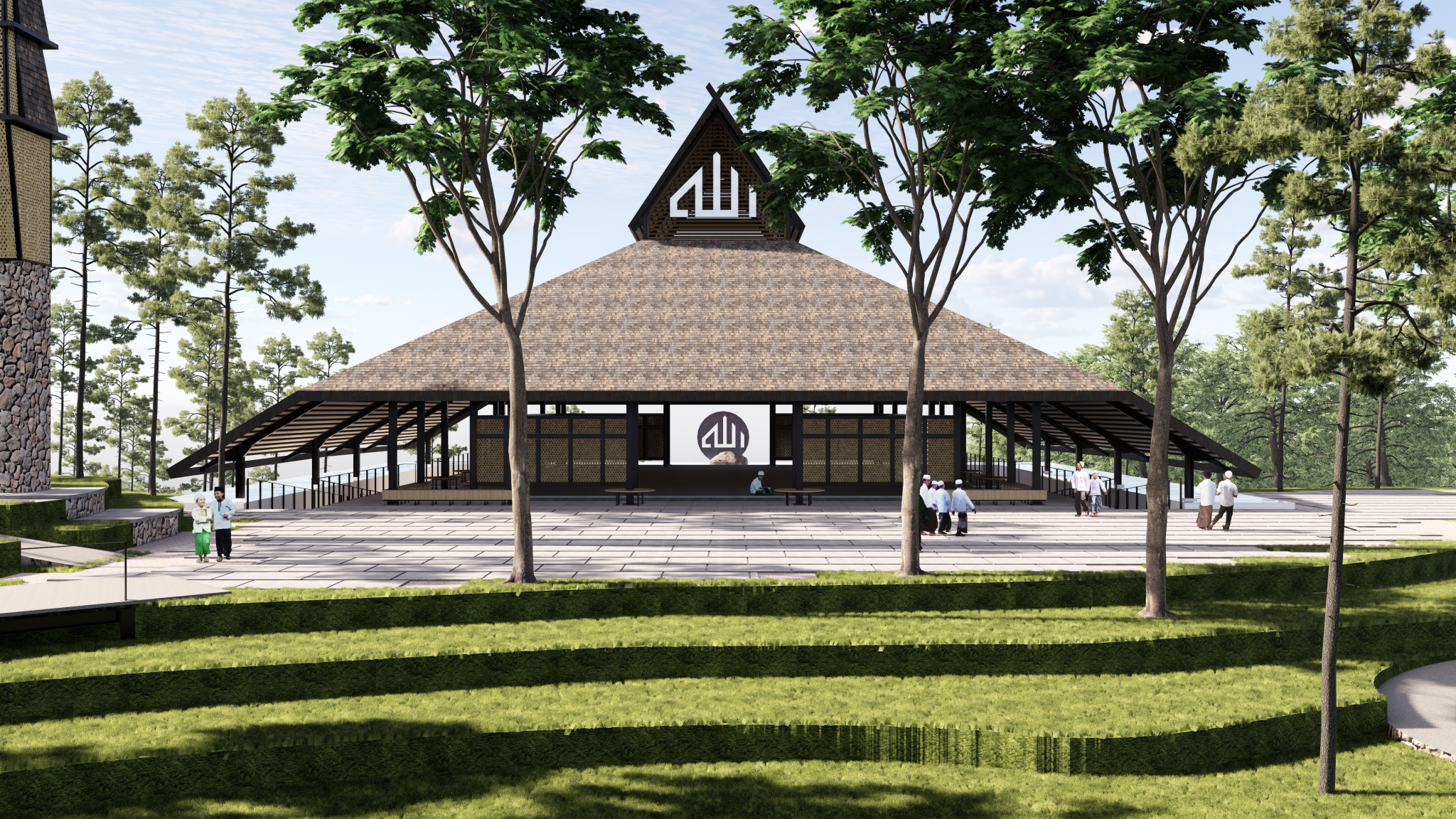
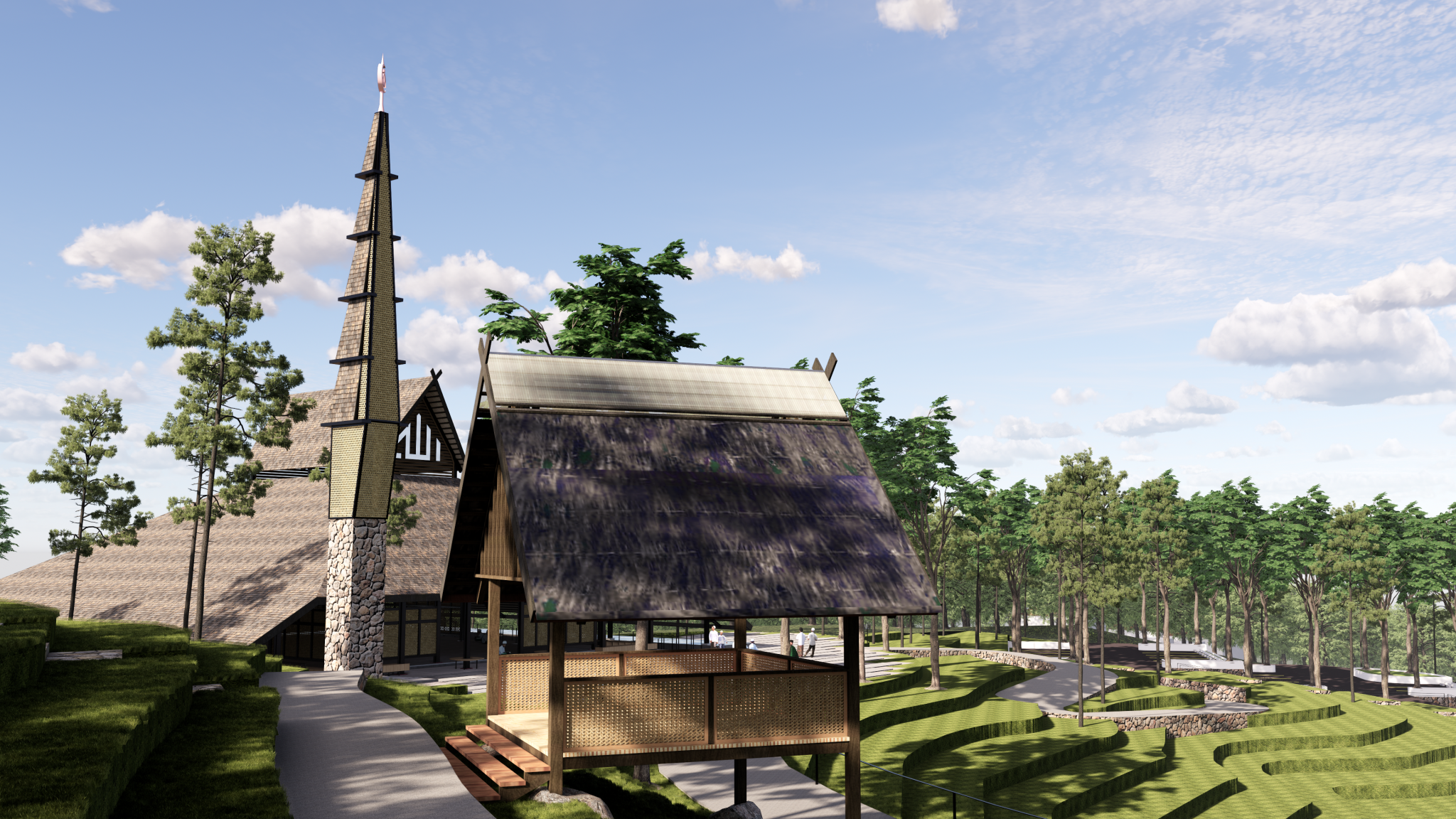
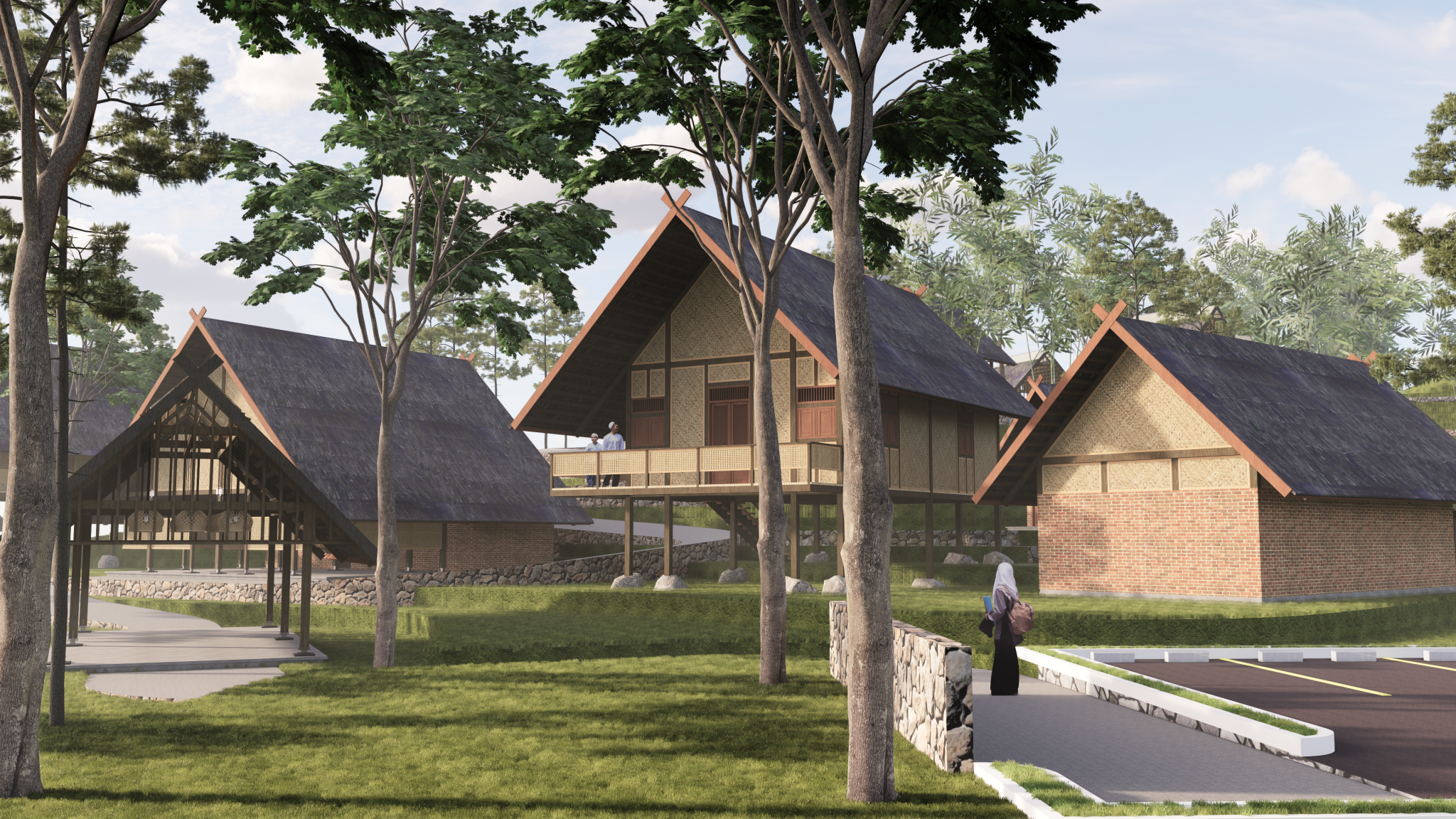
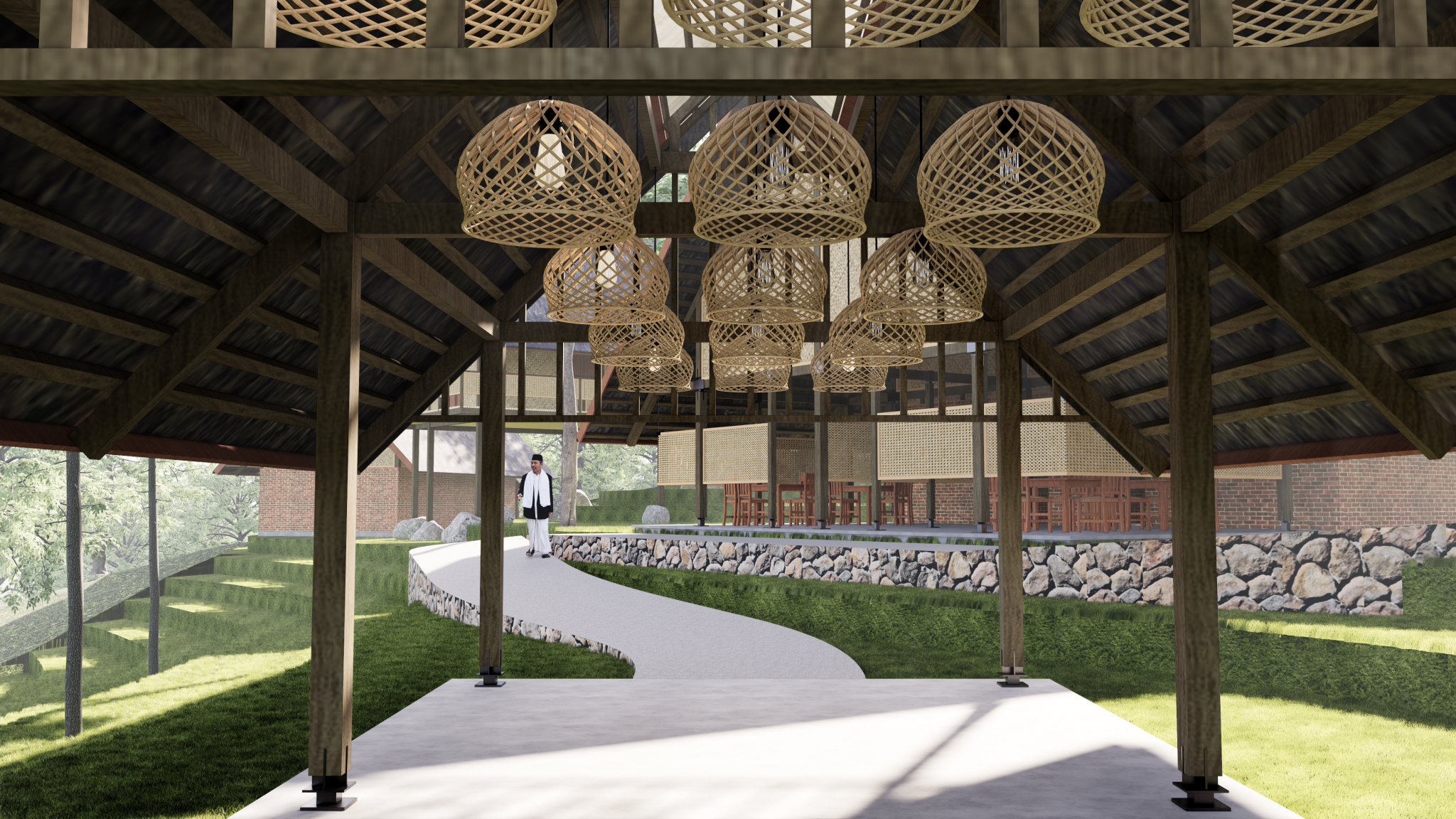
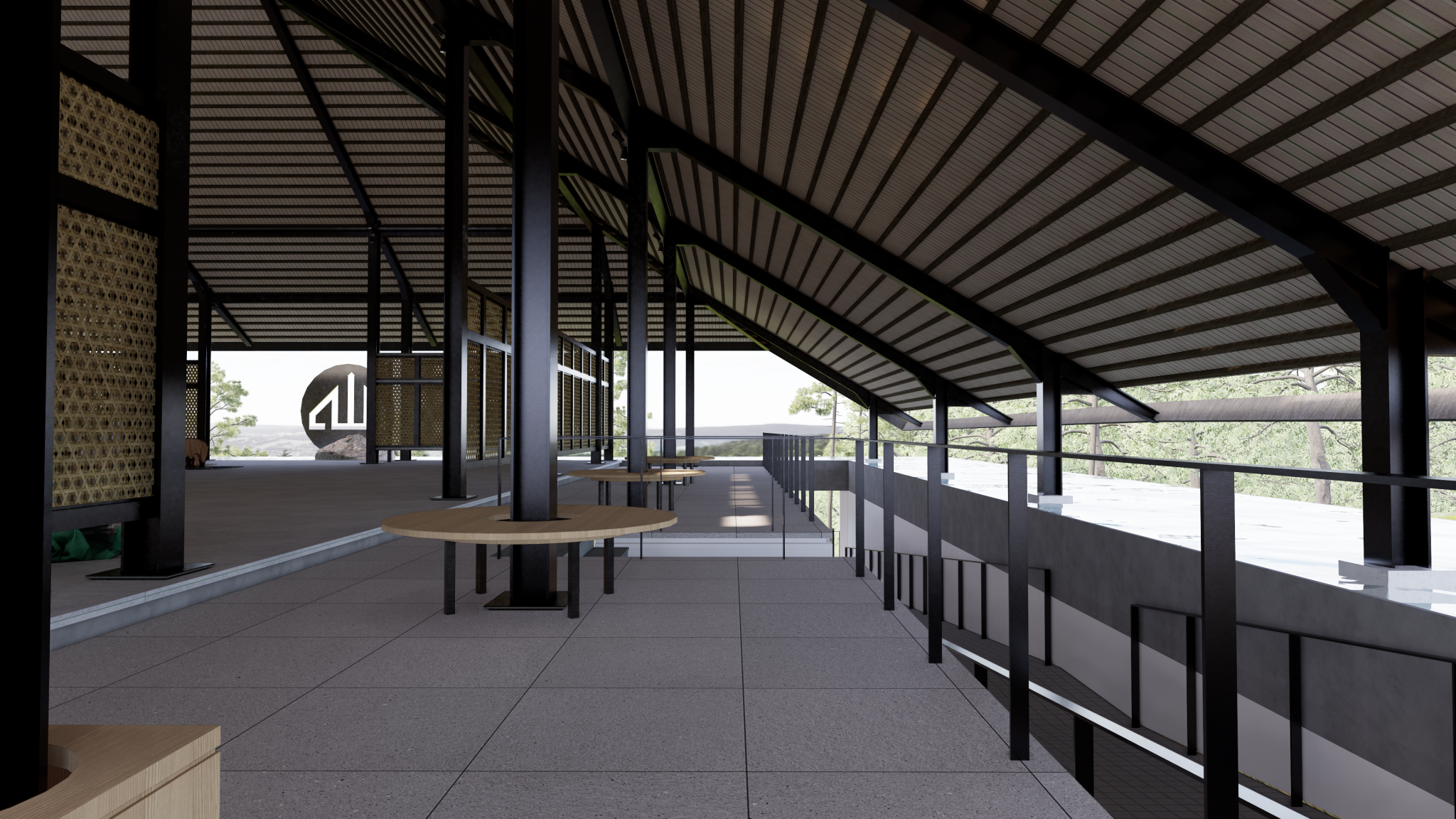
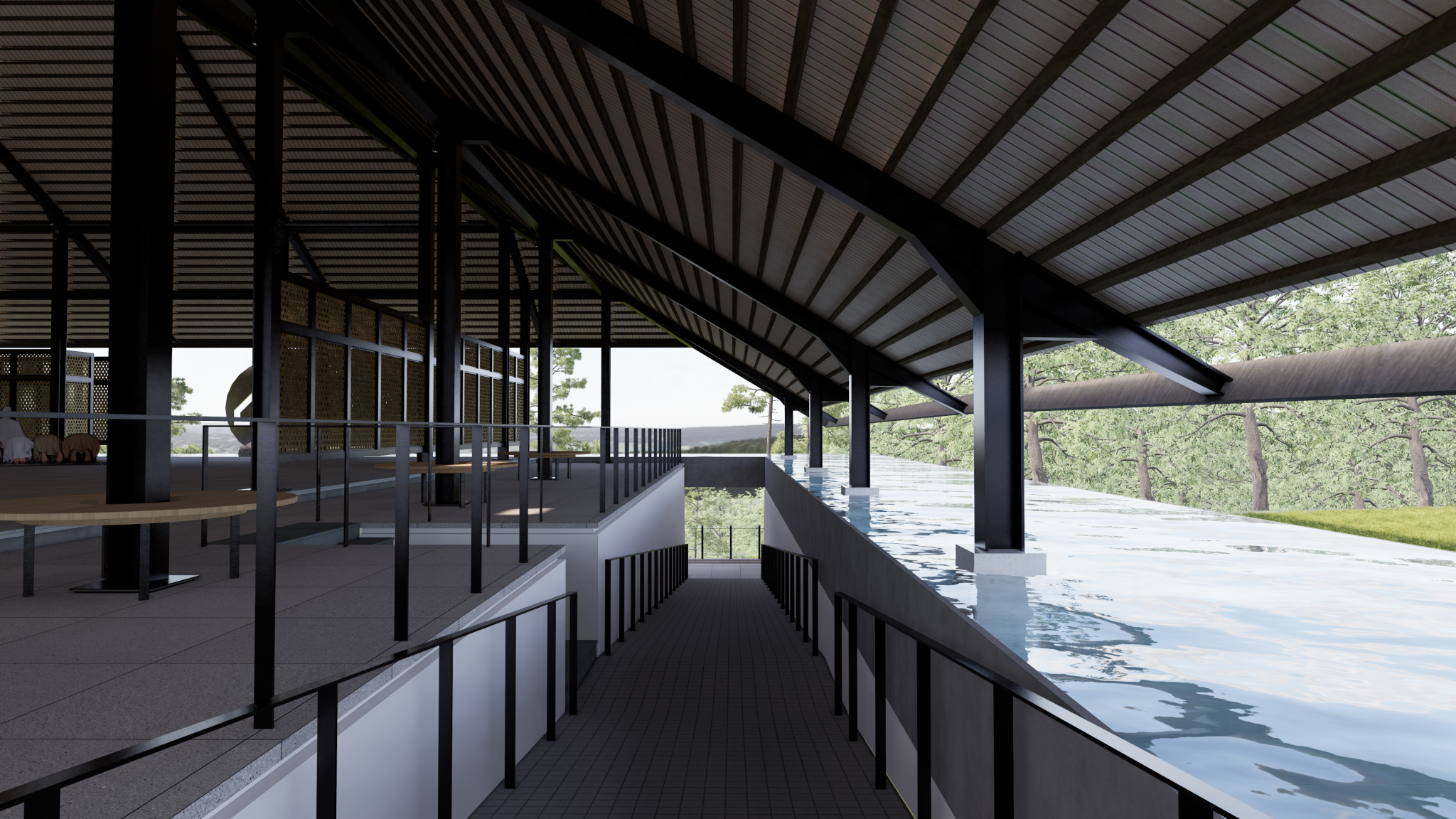
The design of Jabal Quran House is rooted in a harmonious dialogue between traditional and contemporary materials, reflecting a seamless integration with its natural environment. Dominated by the use of stone, wood, terracotta brick, bamboo weaves, and steel, the mosque’s primary structure exudes a sense of timelessness and resilience. The stone and terracotta brick evoke a sense of permanence and solidity, connecting the building to the enduring qualities of the earth. The bamboo weaves add a touch of local craftsmanship and warmth, creating an inviting and serene atmosphere that fosters contemplation and spiritual reflection.
In contrast, the dormitories and auxiliary buildings utilize concrete steel for their structural elements, ensuring durability while maintaining a balance with the more organic materials used in the mosque. This material choice reflects a modern approach to construction that does not compromise on the project’s spiritual and aesthetic integrity. The integration of steel and concrete with traditional materials symbolizes a bridge between the past and the future, embodying the continuity of Islamic scholarly traditions while embracing contemporary architectural advancements.
Programmatic Layout and Functionality
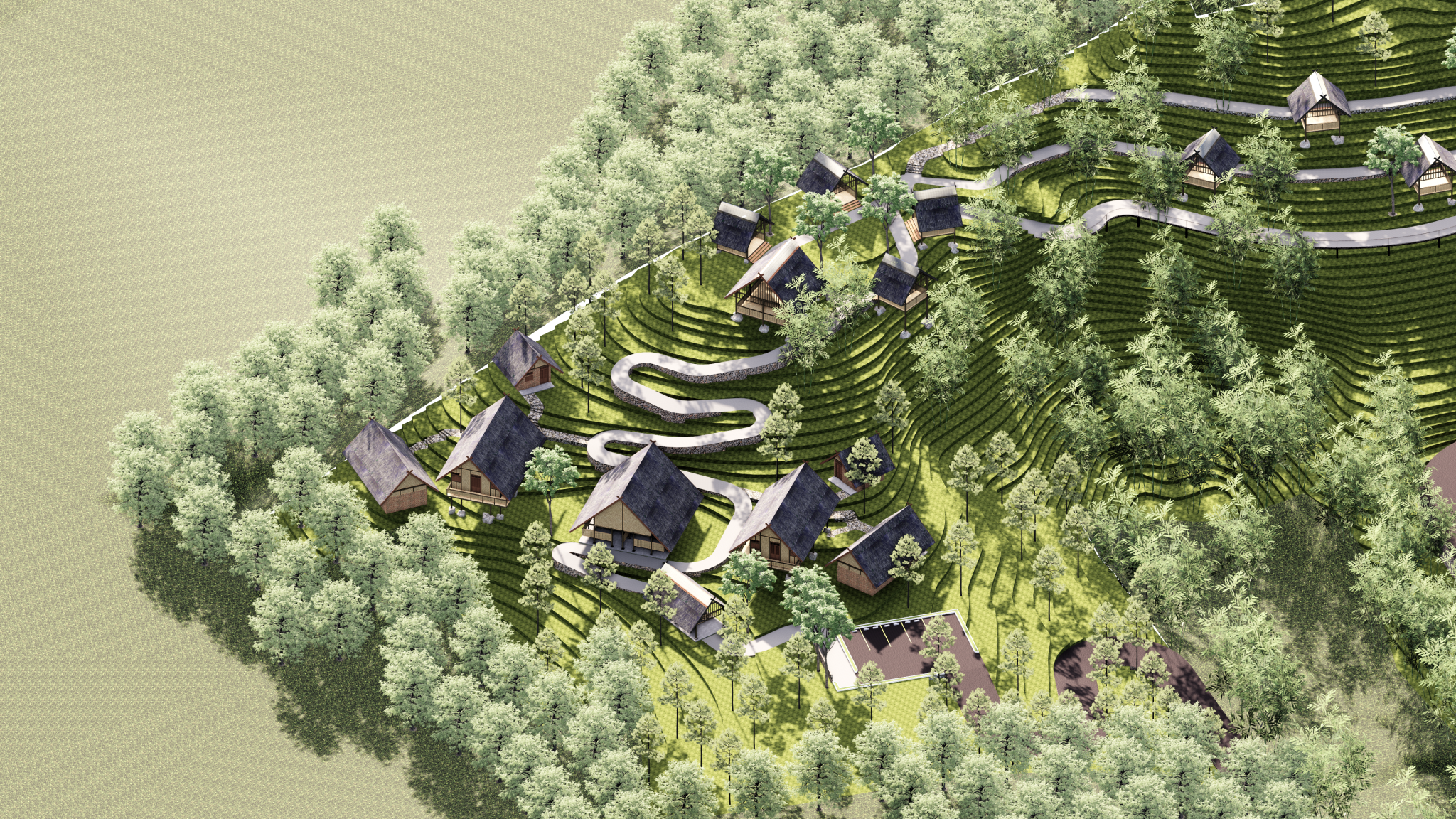
The Jabal Quran House is meticulously planned to accommodate various functions and foster a community dedicated to Quranic studies. The program includes dormitories for both ikhwan (male scholars) and akhwat (female scholars), providing comfortable and functional living spaces that support their academic and spiritual pursuits. Adjacent to the dormitories are the houses for the ustadz and ustadzah, offering additional support and accommodation for the teaching staff.
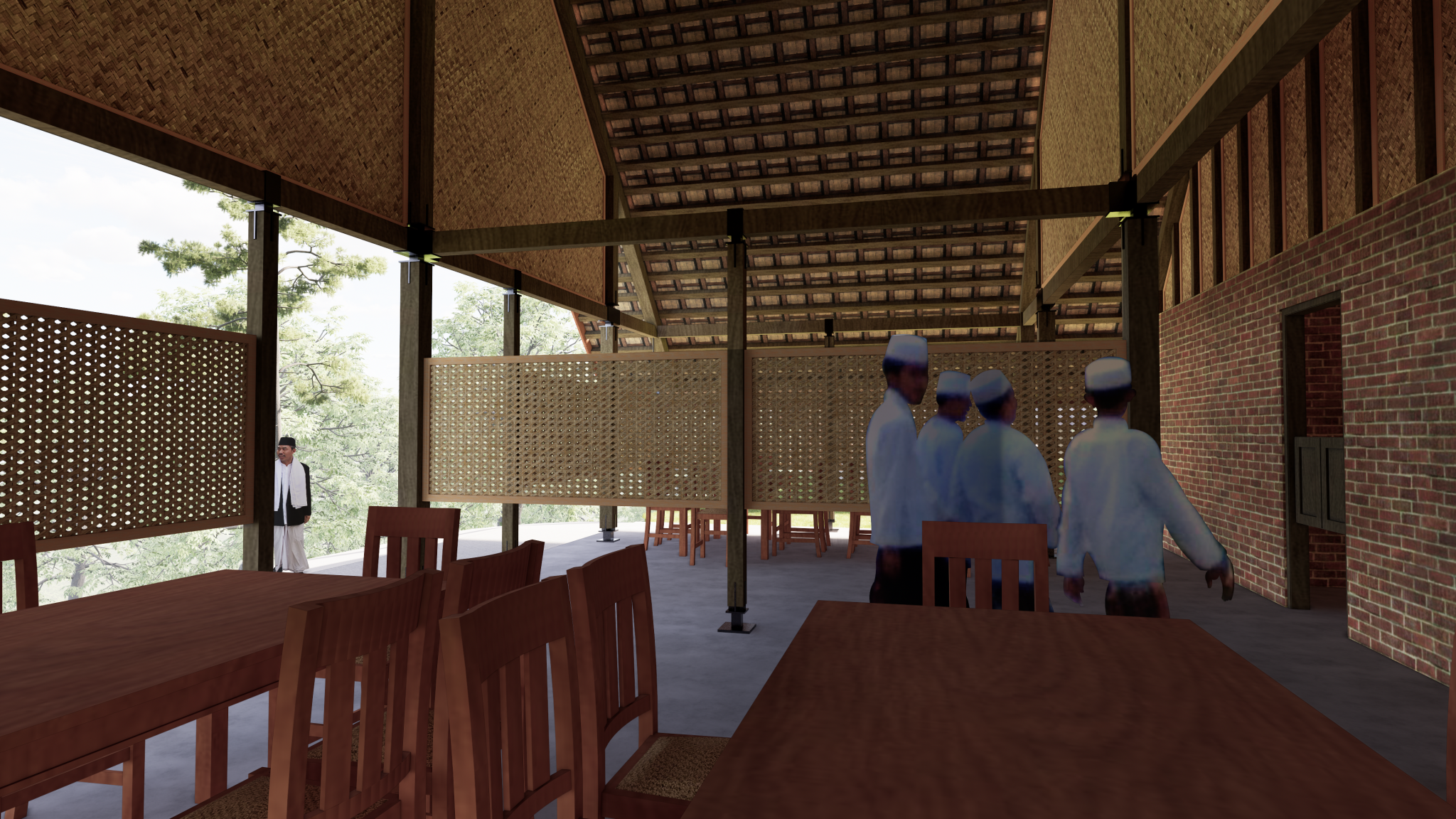
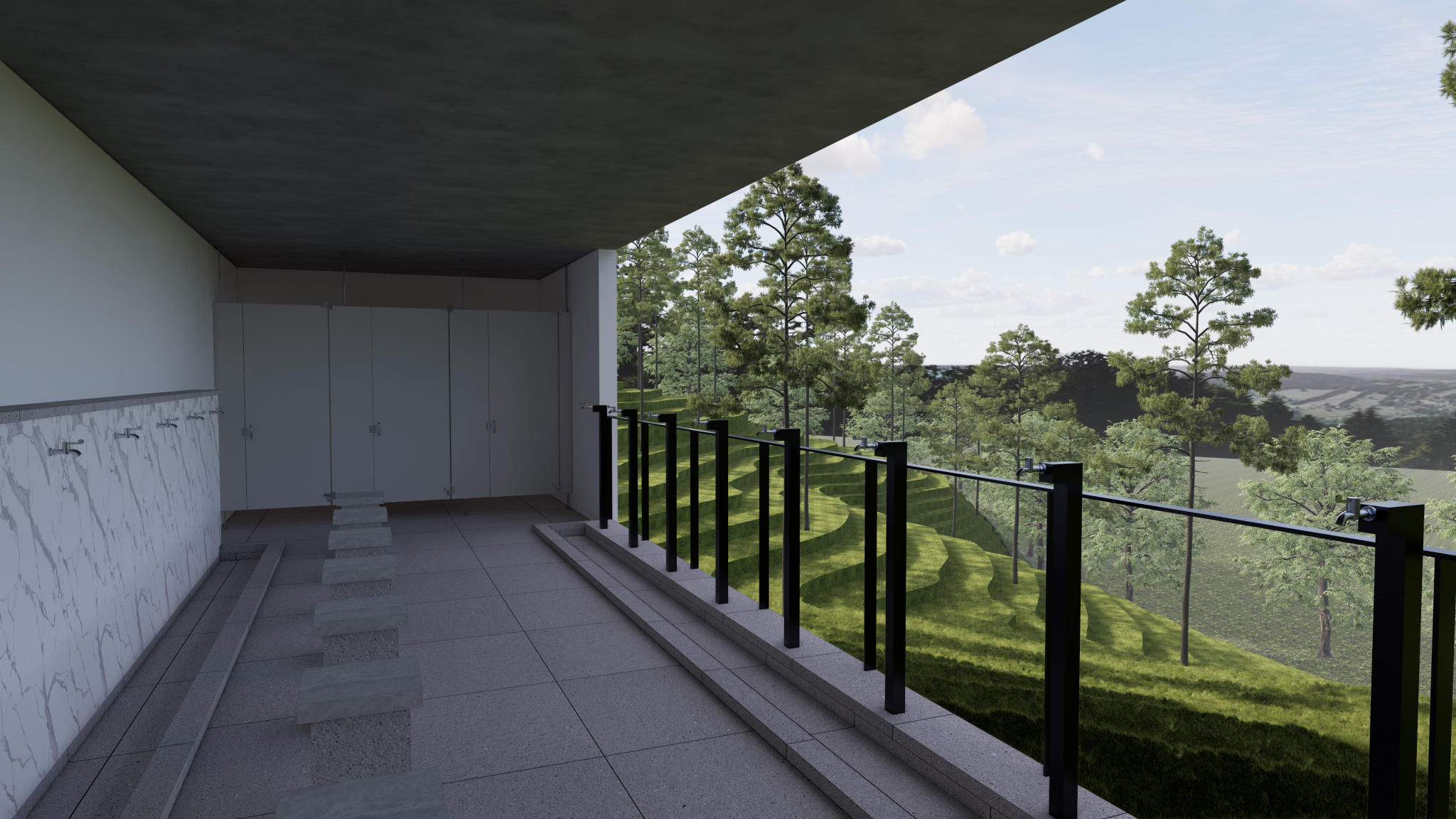
Central to the complex is the Dining House, which not only serves as a place for nourishment but also as a communal space that encourages interaction and fellowship among the residents. The Toilet and Bathroom House is strategically located to ensure convenience while maintaining privacy and hygiene standards.
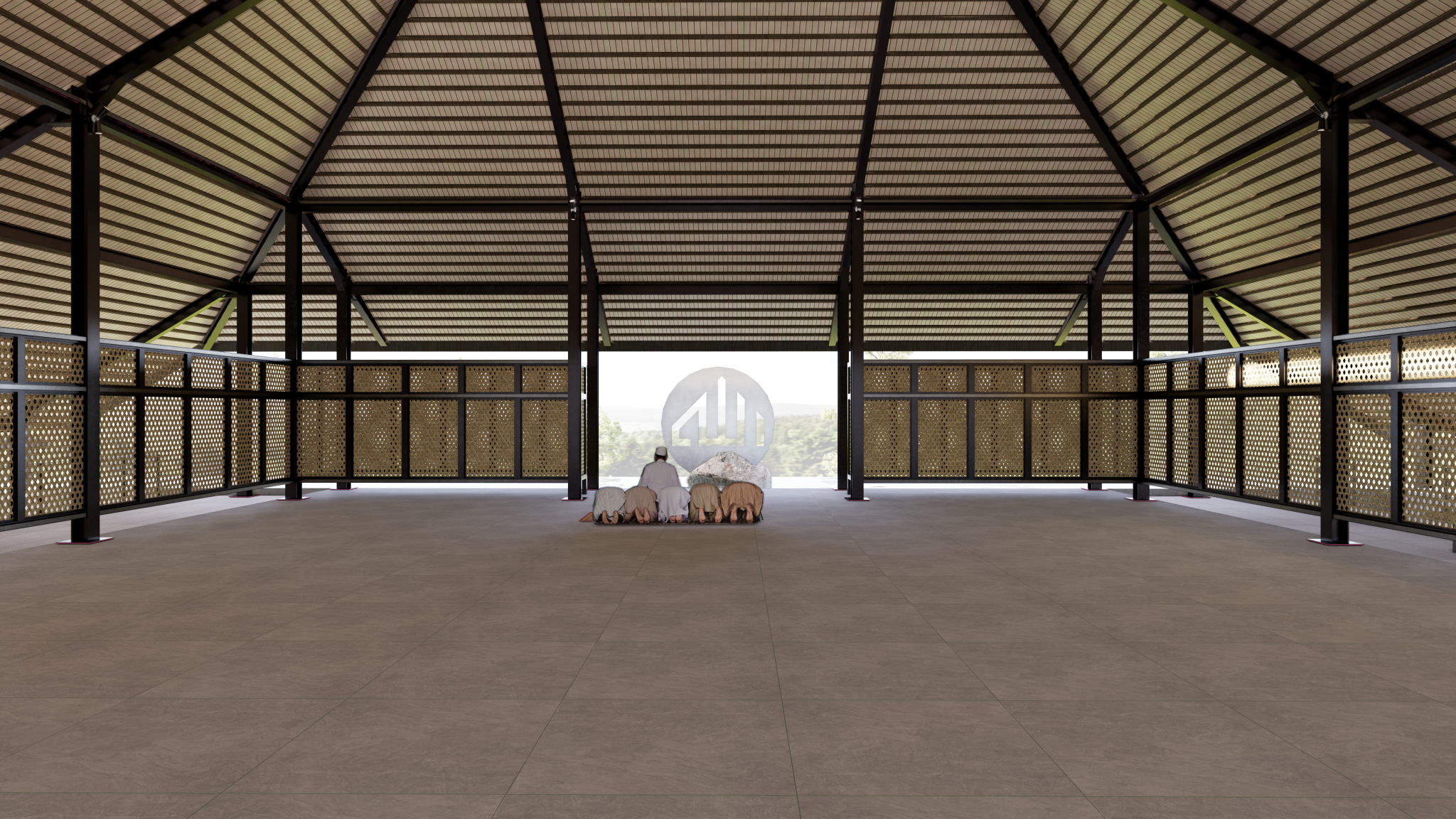
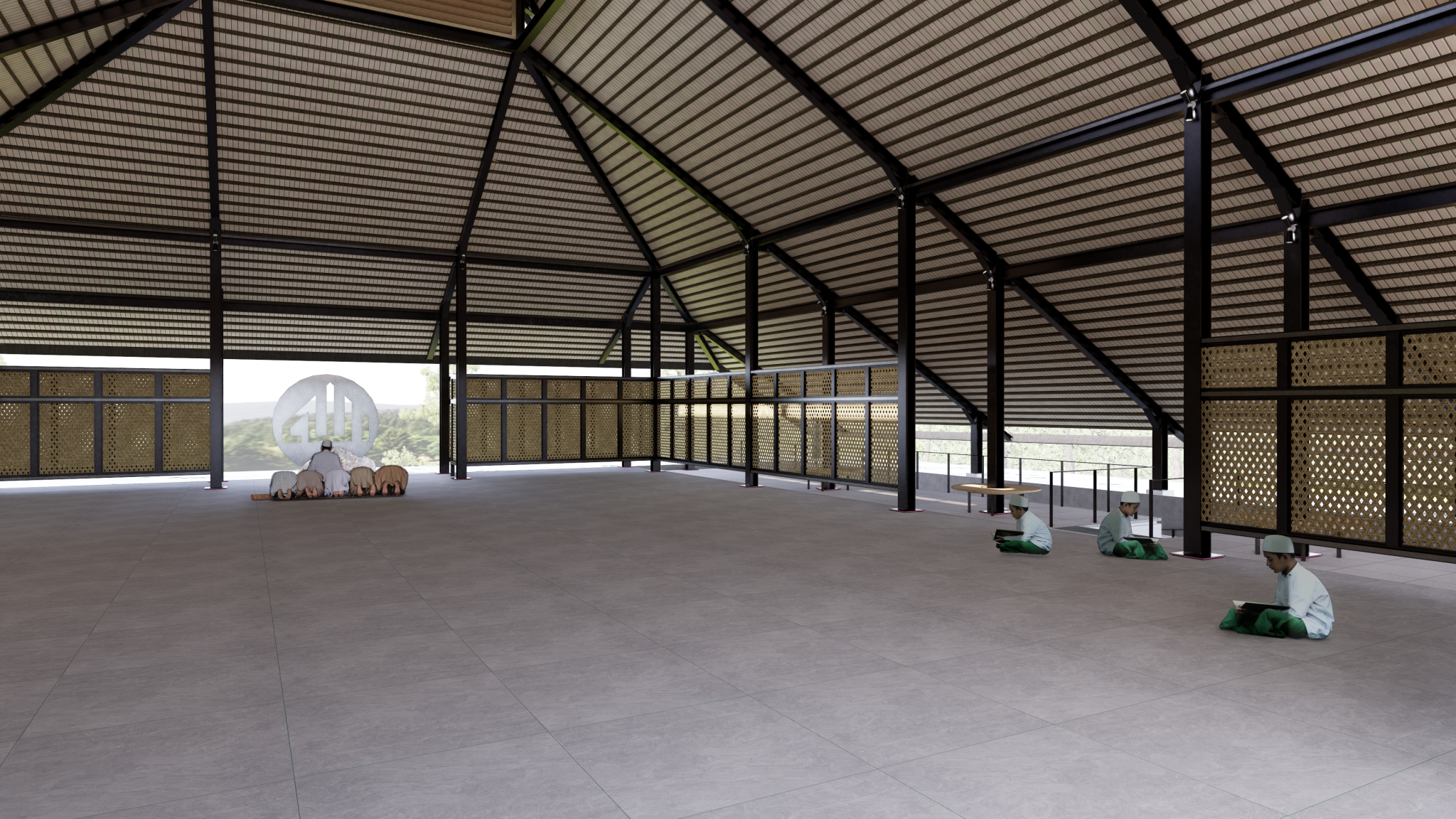
The Mosque, as the spiritual heart of the complex, is designed to inspire awe and tranquility, providing a space for daily prayers, recitations, and communal worship. The use of traditional materials in its construction, combined with modern engineering techniques, creates a sacred environment that resonates with spiritual significance.
Finally, the Bale, a traditional Indonesian pavilion, serves as a guesthouse, welcoming visitors and offering a place for reflection and hospitality. This space is designed to blend seamlessly with the natural surroundings, enhancing the overall sense of peace and connection with the environment.
In summary, Jabal Quran House is a thoughtfully designed architectural project that honors the spiritual and educational objectives of its users while celebrating the rich cultural heritage of Indonesia. The careful selection of materials and the integration of traditional and modern elements ensure that the complex not only meets functional needs but also serves as a place of profound spiritual and intellectual enrichment.